Thursday, August 31, 2017

Strike at Egypt's largest textile mill empowers workers with sense of hope

Socialist Worker
Strike gives hope in Egypt’s textile mills
 
The Mahalla textile strike shows the potential for Egyptian workers to fight in the face of repression

August 29, 2017


Tom Kay 


A recent 14-day strike by Egyptian textile workers was an impressive display of workers’ organisation and resilience in the face of Abdel Fatah el-Sisi’s military regime.

At its height, the strike involved 16,000 workers at the state-owned Misr Spinning and Weaving Company in Mahalla in northern Egypt.

It was suspended on Tuesday of last week after management agreed to consider the workers’ demands.

When workers launched their strike on 7 August, bosses had insisted that their demands would not be met.

The Misr Spinning and Weaving Company chair threatened to lock out workers.

But this threat was met by a demonstration of thousands of workers and their families through Mahalla.

There were also signs that their action could spread. Some 3,000 workers at the nearby Al-Nasr Processing and Dyeing factory joined the strike, and other factories reported slowdowns.

This clearly made bosses nervous, with Al-Nasr management quickly making promises to resolve the dispute.

The Misr Spinning and Weaving Company chairman instructed factory management to open dialogue with the workers.

Before the strike was suspended bosses had ramped up their rhetoric, branding it as “led by terrorists”. This is a reference to the banned Muslim Brotherhood organisation.
Promised

But last Sunday a leaflet signed by the company’s commissioner-general and a group of local MPs promised to consider workers’ demands within the week.

Workers responded by suspending their strike. But they made clear that it will restart after the Eid Al-Adha festival, ending on 4 September, if the promises prove hollow.

While the outcome of the dispute is yet to be seen, it is hugely important.

The Mahalla workers refused to be intimidated by the security forces, and have successfully forced Egypt’s largest state-owned company to consider their demands.

This may seem a small step, but is significant in a country where strikes are illegal and strike leaders and thousands of activists have been jailed.

Workers’ demands included payment of a delayed 10 percent bonus and increasing the monthly food allowance. These issues point to bigger problems the regime is facing.

It has recently pushed through series of “economic reforms” in exchange for a $12 billion International Monetary Fund (IMF) loan.

The IMF declared the Egyptian Central Bank’s governor its “Central Bank Governor of the Year” for the role he played in pushing through the free market reforms.

But these measures have seen inflation jump as high as 30 percent, plunging millions deeper into poverty.

Further laws favourable to foreign investors are expected soon. But alongside more attacks, there is a potential for a fightback.

Recent weeks have seen wildcat strikes by Egyptian train drivers over safety and large protests by residents of Warraq Island in Cairo. The regime is trying to demolish their homes and sell land to investors.

Resistance at Mahalla has often played an important role in Egypt, including during the 2011 revolution.

Mass strikes and uprisings in the city can give confidence to workers and poor people across Egypt to fight.

Total impunity for Sisi's security personnel who killed 900+ protesters four yrs ago

AMNESTY INTERNATIONAL
Egypt: Rampant impunity for security forces illustrates dark legacy of Rabaa massacre


Four years since security forces violently dispersed two sit-ins at Rabaa al Adawiya and al-Nahda squares in Greater Cairo, leaving at least 900 people dead and thousands more injured, Egypt is experiencing an unprecedented human rights crisis, said Amnesty International.

Not a single person has been held to account for the events on 14 August 2013, widely known as the Rabaa massacre. Instead, hundreds who attended the protests, including journalists and photographers who were covering the events, have been arrested and are facing an unfair mass trial. This vacuum of justice has allowed security forces to commit serious human rights violations, including using excessive lethal force and carrying out enforced disappearances, entirely unchecked.

“President Abdel Fattah al-Sissi’s regime has been determined to wipe out all memory of the massacre of the summer of 2013. The dark legacy of this failure to bring anyone to justice is that Egypt’s security forces today feel that they will not be held accountable for committing human rights violations,” said Najia Bounaim, North Africa Campaigns Director at Amnesty International.

“The Rabaa dispersal marks a defining turning point for human rights in Egypt. In the years since then, security forces have stepped up violations and varied their methods, carrying out enforced disappearances and extrajudicial executions on a scale never seen before.”

Since 2015, at least 1,700 people are estimated to have been “disappeared” by state agents for periods ranging from a few days to up to seven months. Most victims are abducted from the streets or their homes and held incommunicado for months, cut off from their families and lawyers. Egyptian security forces have also carried out dozens of extrajudicial executions.

The Egyptian government’s efforts to erase all memory of the 2013 massacres appear to have had some impact. In August 2013, following the excessive use of lethal force by security forces at Rabaa, the EU Foreign Affairs Council agreed to suspend export licenses to Egypt of any equipment which could be used for internal repression.  Despite this, many EU member states have continued to supply the country with arms and policing equipment. The latest EU country report published last month also makes no mention of the Rabaa massacre or the impunity security services still enjoy.

Grossly unfair trials

Since the Rabaa massacre, the Egyptian authorities have led a bitter crackdown against political dissidents, rounding up thousands and sentencing hundreds to life in prison

or death, after grossly unfair trials. In many cases defendants were convicted in mass trials based on scant or dubious evidence. Most faced charges including participating in unauthorised protests, belonging to the banned Muslim Brotherhood group, damaging state and private property, possessing firearms and attacking security forces.

The prosecution authorities, who have an obligation to bring those responsible for the 2013 tragedy to justice, have proven unwilling to investigate and prosecute those responsible for these crimes. Instead of offering justice and remedy for victims, they have helped shield perpetrators from prosecution.

“The level of disparity between the rampant impunity enjoyed by security forces who took part in the Rabaa dispersal on one hand, and the mass persecution of Muslim Brotherhood supporters who participated in protest as well as journalists reporting that day, is shocking,” said Najia Bounaim.

According to official statistics, six security officers were killed during the Rabaa dispersal and three during the al-Fateh protest two days later, also in Cairo. At least 1,231 people are being prosecuted in two mass trials collectively charged with their killing.

At least 737 people were charged for participating in the 2013 sit-in in what is known as “Rabaa dispersal case”. Among them is the journalist Mahmoud Abu Zeid, known as “Shawkan” who was arrested for taking photographs during the sit-in at Rabaa.

Many of those detained are held in appalling conditions including prolonged solitary confinement amounting to torture. They have frequently been beaten and denied access to lawyers, medical care or family visits.

In another emblematic case, known as the “Fateh mosque case”, at least 494 people are on mass trial for participating in a protest on 16 August 2013, while no investigation was conducted into the use of excessive lethal force by security forces that day that killed 120 protesters.

Those on trial include the Irish Egyptian national Ibrahim Halawa. The group are facing charges including participating in an unauthorised protest, belonging to a banned group, as well as murder and attacking the security forces. The prosecution failed to investigate claims by defendants that they were tortured by police to “confess” to crimes they did not commit.

The “Rabaa operations room case” involving four journalists from the RASSD news network - Youssef Talaat, Abdallah Al-Fakharany, Samhi Mostafa and Mohamed El-Adly – is another case that exemplifies the blatant injustice characterizing such trials.

The journalists were sentenced to five years in prison on 8 May 2017 after being convicted of charges including creating and overseeing media committees at the Rabaa sit-in to spread “false information and news”.  During the trial, their lawyers were unable to attend several crucial court sessions leaving them unable to prepare a proper defence. The court’s judgement also relied primarily on investigations by Egypt’s National Security Agency that were not substantiated by material evidence.

Egypt: Journalist jailed for 21 months without trial - health deteriorating at Scorpion Prison

HUMAN RIGHTS WATCH
Egypt: Detained Journalist’s Health Deteriorating

Held 21 Months Without Trial Despite Serious Illness

August 14, 2017

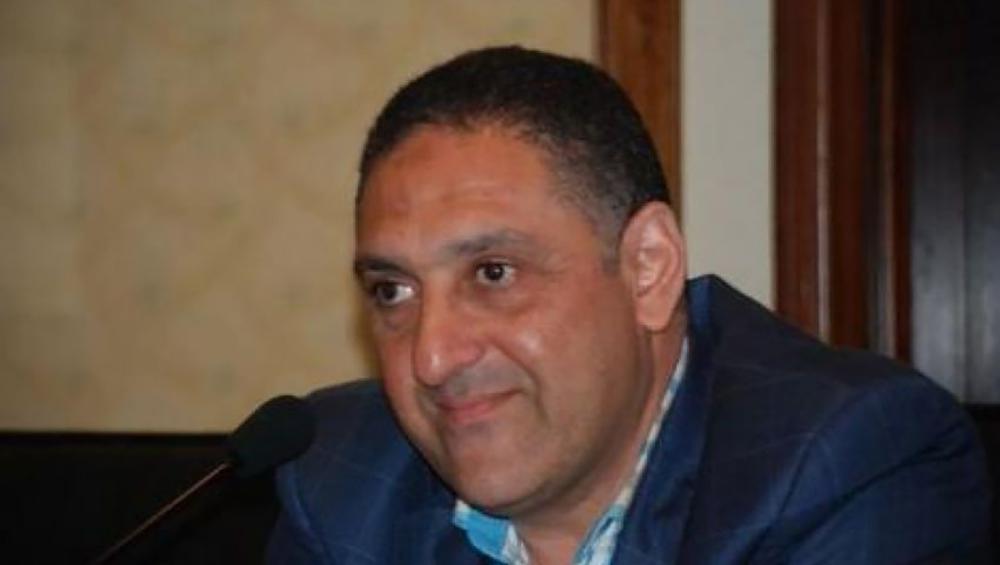
1. Egyptian journalist Hisham Gaafar before his detention in October 2015.

Egyptian authorities should immediately provide appropriate health care to the imprisoned journalist Hisham Gaafar, whose health, including his eyesight, is deteriorating in detention, Human Rights Watch said today. If prison authorities are unable to provide him necessary health care, they should allow him to seek care in private health facilities.
The Interior Ministry’s National Security Agency arrested Gaafar, director of the Mada Foundation for Media Development, a private media company, at his office in October 2015. Prosecutors have ordered Gaafar detained pending investigation on charges that include membership in the Muslim Brotherhood and illegally receiving foreign funds for his foundation, his lawyers told Human Rights Watch.

“Egypt’s Interior Ministry has shown contempt for Hisham Gaafar’s health and well-being,” said Sarah Leah Whitson, Middle East director at Human Rights Watch. “The fact that the Interior Ministry refuses to provide him his rightful care is a sad testament to Egyptian authorities’ disregard for detainees’ most basic rights.”

Gaafar, 53, has an eye condition – optic nerve atrophy – that requires ongoing specialist care or he may risk losing his sight altogether. He also suffers from a years-long prostate enlargement condition and risks complications if he does not receive the proper treatment. His eyesight is deteriorating and his health has worsened during his time in detention, in poor conditions, his family said.

Immediately following his arrest, police took Gaafar to his home, where officers seized his personal publications, work papers, computers, and phones, including those belonging to his wife and children. They detained his family inside the home for 17 hours. Security officers confiscated all his medical documents and reports and have not returned them to his family, despite their requests.

National Security officers then took Gaafar to an undisclosed location and held him for two days without access to his family or lawyers. His family heard of his whereabouts when a lawyer saw him by coincidence in the Supreme State Security Prosecution office in Cairo. Prosecutors have kept him in pretrial detention since then.

Under Egyptian law, prosecutors have broad power to hold those suspected of committing major offenses, including political and national security crimes, in pretrial detention for up to five months without regular judicial review, and judges can extend the detention for up to two years without requiring any substantive justification from prosecutors.

A judge should immediately review the necessity and legality of Gaafar’s detention and either send him to trial without further delays or release him, Human Rights Watch said.

During Gaafar’s time in detention, most of it spent in the maximum security Scorpion Prison in Cairo, the Interior Ministry’s Prisons Authority has not provided needed medicine but has intermittently allowed Gaafar to receive the eye vitamins and prostate medicine he required, after completely banning such supplies for the first two months of his detention. During those two months, his wife, Manar, told Human Right Watch, prison authorities kept Gaafar alone in a cell that, in his words, resembled a “tomb” without sunlight.

Later, they allowed his family very short and irregular visits, with no chance to verify whether he had received the medicine they had given to prison guards for him. Since March 2017, prison authorities have again denied him visits from relatives and his lawyer.

Before he was detained, Gaafar used special optic tools to read and glasses for everyday life. He also needed some assistance in his daily routine, his wife said. Prison authorities allowed his wife to deliver the glasses several months after his detention, but when they reached him, they were broken.

The way the glasses were broken suggested it had been deliberate, his wife said. She delivered new ones, but he has not had a new eye examination. His wife said that he recently told her he was not seeing as well as before, even with the glasses, suggesting his eyesight may have deteriorated.
Gaafar has had optic nerve atrophy in both eyes since he was a teenager, according to his wife.

Medical documents and reports from 2012, which she provided to Human Rights Watch after she retrieved them from a hospital, stated that at the time he had only 10 percent of his vision remaining in his left eye. Optic nerve atrophy has no cure, but it can be slowed by exposure to sunlight, medicine, and a healthy diet, his wife said doctors had told them. These are not available in adequate amounts to inmates at Scorpion Prison and many other Egyptian detention facilities.

A Human Rights Watch report on Scorpion Prison, published in 2016, documented cruel and inhuman treatment by officers of the Interior Ministry’s Prisons Authority that probably amounted to torture, including preventing food and medicine deliveries and other interference in medical care that may have contributed to prisoners’ deaths.
Gaafar’s wife said he appeared weak and to have lost significant weight during her March 2017 visit. She said she saw bite marks all over his body, which he said were from insects that had infested his cell due to a sewage leak. He told her he had suffered pain for weeks because he was sleeping on the concrete floor without a mattress. Human Rights Watch previously documented that Scorpion Prison authorities deny inmates a wide variety of basic necessities for hygiene and comfort, including beds, pillows, and mattresses.

In late February 2016, after a public outcry and growing criticism from the Journalists’ Syndicate, human rights organizations, and public figures, the authorities transferred Gaafar to the Tora Prison Hospital after he began suffering from urinary retention – the inability to fully empty his bladder.

Prison authorities then transferred him to al-Manial University Hospital, which is affiliated with Cairo University. Doctors who examined him there on March 4, and again on March 10, 2016, asked prison officials to allow him to be kept at Cairo University hospitals to prepare for more tests, including diagnostic surgery on his enlarged prostate, the apparent cause of the urinary retention.

Gaafar spent five months at the prisoners’ ward at Qasr al-Aini Hospital, where ill inmates who are hospitalized are usually held, but the authorities repeatedly failed to give Gaafar timely permission to go for needed tests. Human Rights Watch has previously documented that prison authorities pressure hospitals not to admit inmates or to return them without necessary treatment.

Gaafar told his wife that he received very little medical care there. In August 2016, the authorities sent Gaafar back to Scorpion Prison before he had undergone the examinations that he was told he needed. Prison authorities and Cairo University hospitals have not allowed Gaafar’s family to read or obtain a copy of the medical reports issued during his detention, his wife said.

The family managed to obtain the hospital discharge report through unofficial means, however, and provided a copy to Human Rights Watch. The report contained no detailed information on any tests Gaafar may have undergone or treatment received but stated that he suffers from “mild prostate enlargement" and that "the patient needed no surgical intervention.” The report did not state what caused the enlargement or whether it was benign or cancerous – a primary concern for the family.

A couple of days after returning to prison, Gaafar found blood in his urine, and officers transferred him again to Tora Prison Hospital. But the facilities there lack a urology specialist, his wife said, and the prison authorities have refused to arrange for Gaafar to be seen by one. He appeared before a court in August 2016 carrying a urinary catheter, his lawyers said.

His wife said that after filing several complaints, a National Security officer visited Gaafar in detention in November 2016, and told him, “don’t worry, we will treat you.” But Gaafar’s request to seek treatment in a private health facility was ignored.

One of his lawyers and his wife both told Human Rights Watch that prosecutors never allowed them to obtain a copy of the official charges against him or the rest of his case file. However, Hossam al-Sayed, another Mada Foundation journalist who was arrested with Gaafar on the same day, was released without bail in March 2016, said the lawyer Karim Abd al-Rady of the Arab Network for Human Rights Information (an independent rights group).

Under an amendment to the penal code decreed by President Abdel Fattah al-Sisi in September 2014, Gaafar could face a 25-year sentence if convicted of receiving foreign funds illegally.

Prisoners have the right to the highest attainable standard of physical and mental health guaranteed in the International Covenant on Economic, Social and Cultural Rights, which Egypt ratified in 1982.

The Committee Against Torture, the monitoring body of the Convention against Torture and Other Cruel, Inhuman or Degrading Treatment or Punishment – ratified by Egypt in 1986 – has found that failure to provide adequate medical care can violate the treaty’s prohibition of cruel, inhuman, or degrading treatment.

“It is deeply concerning that Egypt’s judiciary has become complicit in human rights violations by cruelly detaining people like Gaafar for years without justification, exposing them to serious abuse and harm,” Whitson said.

Saudi-led war on Yemen contributes to cholera outbreak, killing ~2,000 & affecting 500,000+

AFP
Yemen cholera cases soar past half-million: WHO


Cholera is believed to have affected more than 500,000 people and killed nearly 2,000 since late April, the World Health Organization said Monday.

A full 503,484 suspected cases and 1,975 deaths are attributable to the outbreak that erupted last than four months ago in the war-ravaged country, a WHO overview showed.

The UN health agency said the speed at which the deadly waterborne disease was spreading had slowed significantly since early July, but warned that it was still affecting an estimated 5,000 people each day.

The collapse of Yemen's infrastructure after more than two years of war between the Saudi-backed government and Shiite rebels who control the capital Sanaa has allowed the country's cholera epidemic to swell to the largest in the world.

WHO warned that the disease had spread rapidly due to deteriorating hygiene and sanitation conditions, with millions of people cut off from clean water across the country.

"Yemen's health workers are operating in impossible conditions," WHO chief Tedros Adhanom Ghebreyesus said in a statement.

"Thousands of people are sick, but there are not enough hospitals, not enough medicines, not enough clean water," he said, also lamenting that many of the doctors and nurses needed to rein in the outbreak had not been paid for nearly a year.

"They must be paid their wages so that they can continue to save lives," he said.

WHO said that it and its partners were "working around the clock" to support the national efforts to halt the outbreak, adding that more than 99 percent of people who contract cholera in Yemen can survive if they can access health services.

More than 15 million people in the country have no access to basic healthcare.

Tedros called on all sides in Yemen's conflict, which has killed more than 8,300 people since March 2015, to urgently seek a political solution.

"The people of Yemen cannot bear it much longer - they need peace to rebuild their lives and their country," he said.


*Photo courtesy of AFP 

Tunisia: Fishermen prevent anti-migrant ship from docking

BBC News
Tunisia fishermen prevent far-right ship from docking

Sunday, 6 August 2017


Tunisian fishermen have prevented a ship carrying European far-right activists from docking, dealing a blow to their mission to disrupt the flow of migrant boats from Africa to Europe.

The C-Star, chartered by French-based group Génération identitaire (GI), was unable to berth in Zarzis.

GI says non-governmental organisations active in the Mediterranean collude with people traffickers.
But the Zarzis fishermen said the anti-migrant activists were racists.

They vowed not to let the C-Star refuel if it landed and the vessel is now expected to try another Tunisian port on Monday.


"It is the least we can do given what is happening out in the Mediterranean," Chamseddine Bourassine, head of the local fishermen's organisation, told AFP news agency. "Muslims and Africans are dying."

A port official who asked to remain anonymous said: "Us let in racists here? Never."

Meanwhile humanitarian groups say any attempt to turn migrant boats back to Libya could be very dangerous and illegal under international law.

About 600,000 migrants have been rescued from traffickers' boats and taken to Italy since the beginning of 2014.

More than 10,000 people have died attempting to cross the Mediterranean over the same period.
Earlier this month rights group Amnesty International accused the EU of mostly leaving it up to sea rescue charities to save migrants.

At the same time, NGOs have come under criticism from the Italian authorities, who have threatened to stop vessels of other countries from bringing migrants to Italian ports.

Italy's parliament has approved a plan to send naval boats to Libya as part of its efforts to stop migrants crossing the Mediterranean, and is asking NGO rescue ships to abide by a code of conduct.


*Photos courtesy of AFP/Getty Images

Monday, July 31, 2017

Egypt police kill protester, injure 50 others in clashes over Nile island

Associated Press
Egypt Says 1 Killed, 50 Injured in Clashes on Nile Island 
 
July 16, 2017 

HAMZA HENDAWI

Egyptian authorities say police have fired tear gas to disperse a rock-pelting crowd of residents on a River Nile island in Cairo, clashes that left one person killed and 50 others injured.


CAIRO (AP) — Egyptian police on Sunday fired tear gas to disperse a rock-pelting crowd of residents defending their homes on a Nile River island against bulldozers sent by the government to demolish their illegally-built dwellings. The clashes left one person dead and 50 others injured.

The violence on the island of el-Waraq on the southern fringes of Cairo is likely to stain a nationwide campaign launched this summer by Abdel-Fattah el-Sissi, Egypt's general-turned-president, to restore government control over state-owned land.

El-Sissi has vowed in televised comments to show no lenience to anyone taking illegal advantage of state-owned property, saying the law would prevail regardless of how powerful or wealthy the offenders were. Anyone using land that does not rightfully belong to them, he angrily said, is a "common thief."

Illegal use of state land is widespread in Egypt, as well as building on agrarian land in violation of the law. Since el-Sissi launched his campaign earlier in the summer, local media has been showing images of police and army troops demolishing buildings illegally built or operating without a license, attempting to project an image of a government keen on protecting what is being billed as "people's property."

To el-Waraq's middle class and poor residents, however, the sight of bulldozers coming to demolish their homes may have been more than they could bear at a time when they, like most Egyptians, are struggling to cope with soaring prices for food and services, a result of ambitious reforms introduced by el-Sissi's government to revive the country's battered economy.

"Get lost! Get lost!" the protesters shouted at the scores of policemen who descended on the island early Sunday, backed by bulldozers, scores of riot policemen and led by senior police generals. The protesters, mostly young males, succeeded in forcing the bulldozers to turn away, but clashes soon began.

The Health Ministry said a resident died and another 19 were wounded in the clashes. It did not say how the man, Sayed el-Tafshan, died, but a photo of his body posted on social media networks showed chest wounds compatible with birdshot.

The Interior Ministry, which controls the police, said its forces only used tear gas.

A ministry statement said a total of 31 people — policemen as well as contractors who arrived with them on the island — were injured in the clashes. The injured policemen included two generals.
Ten residents were arrested for their part in the violence, it added.

Video clips posted on social media networks showed hundreds of angry islanders, mostly young men, at the man's funeral, marching through farm fields while chanting "We will sacrifice the martyr with our soul and blood."

The statement said the residents attacked police with firearms, birdshot guns and rocks, and that police responded with tear gas. It said up to 700 building and land violations were recorded on the island. It acknowledged the death of one islander and that 19 others were injured.

In el-Waraq, a mostly agricultural island with shoddily built apartment blocks, residents maintain that their homes are legal, citing the government's supply of drinking water and electricity.

One of the Nile's largest islands in Egypt, it is home to nearly 200,000 people and is linked to the mainland by six ferries.

"How is my home illegal when you have for years provided me with water and electricity," said resident and civil servant Mahmoud Essawi. "It's our land and we are not leaving."

In a separate development, Egypt's military said its jet fighters destroyed 15 all-terrain vehicles carrying weapons and explosives along with "criminal elements" after they were detected getting ready to cross the Libyan border into Egypt.

A military statement Sunday said the warplanes monitored and "dealt" with the vehicles over the past 24 hours, but it did not say whether the airstrikes targeted them while on Egyptian soil. It also did not mention Libya by name, making only a thinly veiled reference to the North African nation.

*Photo by Mostafa Darwish, courtesy of AP

Egypt arrests/deports 200+ Uighur students

VOA News
More Than 200 Uyghur Students Detained in Egypt

July 14, 2017

Officials in Egypt continue to detain and send ethnic Uyghur students to China.

Radio Free Asia (RFA) reports the students were studying at Al-Azhar Islamic University in Cairo.
RFA and VOA are each part of the United States government-supported Broadcasting Board of Governors.

Uyghurs are a mostly Muslim ethnic group in China and Central Asia. Most live in the Xinjiang Uyghur Autonomous Region of western China.

RFA reported in May that Chinese officials had begun ordering Uyghurs studying outside of China to return to their hometowns.

A Uyghur student at Al-Azhar told RFA at the time that classmates who had returned to China seem to have disappeared.

“We haven’t been able to contact any of them,” the student said.

More than 200 Uyghurs, many of them religious students, have been detained in Egypt since July 4. Some were seized in restaurants or at their homes. Others were stopped at airports while trying to flee to safer countries, sources told RFA.

The Middle East Monitor reported that as many as 80 Uyghur students may have been seized on Wednesday. They were arrested for alleged problems with their Egyptian residency papers, the Monitor said in its report.

Criticism of China's treatment of Uyghurs

Human rights and Uyghur exile groups have condemned China for violating the rights of the Uyghurs and for breaking a United Nations treaty.

The agreement bars forced repatriations.

Sandra Jolley is with the United States Commission on International Religious Freedoms. She told RFA that the Egyptian government’s actions violate international rules against torture.

Such rules protect people who may face “imprisonment, torture and death should they be deported to their homes,” Jolley said.

She and others are urging the Grand Imam at Cairo’s Al-Azhar Islamic University to help stop the forced repatriations of Uyghurs.

Dr. Ahmed El-Tayeb currently serves as the school’s Grand Imam.

“He has a powerful voice. He leads Al-Azhar, and he should accept some role in protecting the students who attend this very prestigious university,” Jolley said.

Call for protection

A group of Uyghur students living in Cairo have also appealed to El-Tayeb. In a letter, they asked him to prevent future deportations.

“Our only sin is that we want to learn and study religion,” the students said.

The Arabic-language news service HuffPost Arabi received a copy of the letter.

Last week, Al-Azhar said in a statement that no Uyghur students had been arrested on the university’s grounds or while in any buildings connected with the school.