Showing posts with label Police/Pigs. Show all posts

Saturday, September 30, 2017

Egypt: Stop arrests, crackdown on LGBT individuals

HUMAN RIGHTS WATCH

Egypt: Stop Anti-LGBT Crackdown, Intimidation
‘Rainbow Flag’ Arrests Violate Privacy, Freedom of Expression

September 30, 2017


Egypt should stop arresting and harassing people suspected of homosexuality using trumped-up “debauchery” and “inciting debauchery” charges, Human Rights Watch said today. Security forces rounded up at least eleven people in the days following a September 22, 2017 concert in Cairo at which young concertgoers waved rainbow flags, a symbol of solidarity with  lesbian, gay, bisexual or transgender (LGBT) people, a defiant act in a country known to persecute gay men and transgender people.

After concertgoers shared photos of the rainbow flag display on social media, pro-government media went on an overdrive attack and conservative politicians and religious leaders demanded that the government take action. Police arrested one man on September 23 through entrapment on a dating app, a common police technique in Egypt, and claimed he had been among those to wave a flag.

On September 25,  the government said that it had arrested seven people identified through video footage of the concert. Several Egyptian activists questioned the veracity of this claim, but they documented additional arrests on September 27, when police picked up six men from the streets, charging them with debauchery and claiming they were all involved in the rainbow flag incident.

“Whether they were waving a rainbow flag, chatting on a dating app, or minding their own business in the streets, all these debauchery arrest victims should be immediately released,” said Sarah Leah Whitson, Middle East and North Africa director at Human Rights Watch. “The Egyptian government, by rounding people up based on their presumed sexual orientation, is showing flagrant disregard for their rights.”

The Dokki Misdemeanor Court in Giza sentenced the first victim on September 26 to six years in prison and a fine for “debauchery,” based on his presumed sexual conduct, and “inciting debauchery,” as prosecutors alleged he was among those who raised the rainbow flag at the concert. The court sentenced him to an additional six years of probation which will require reporting to the police from 6p.m. to 6a.m. until 2029. No lawyer was present at his trial.  He now has legal representation, and his appeal will be heard on October 11.

The six men arrested on September 27 are scheduled for trial on October 1. At least two more men were arrested on September 28 because of their presumed sexual orientation, and Egyptian media reported that another six men were arrested on September 28 in a raid on a home, although Human Rights Watch has not independently verified that report.

At the September 22 concert, people raised rainbow flags during the performance of the Lebanese group Mashrou’ Leila, which has an openly gay lead singer and has performed songs addressing same-sex relationships and gender identity. The Egyptian Musicians Syndicate opened an investigation into the event and banned future Mashrou’ Leila concerts in Egypt.

In Egypt, police routinely round up gay and bisexual men and transgender women, actively seeking them out and entrapping them on dating apps and through social media. One Cairo-based organization has documented the prosecution of at least 34 people for consensual same-sex conduct in the last 12 months. Since President Abdel Fattah al-Sisi came into power in 2014, several hundred people have been imprisoned on charges of consensual same-sex conduct.

Egyptian activists told Human Rights Watch they fear that the past week’s arrests could signal the beginning of an even harsher crackdown on LGBT people and those who publicly support them.

Egypt’s Forensic Medicine Authority also routinely subjects people to forced anal examinations. The archaic technique was devised in the 19th century to seek “evidence” of homosexual conduct,  but forensic experts around the world have condemned the practice as lacking any scientific validity and violating medical ethics. The UN  special rapporteur on torture,  the UN Committee Against Torture, and the African Commission on Human and Peoples’ Rights have described the exams as a form of torture or ill-treatment, prohibited under international law. The Egyptian Medical Syndicate has taken no steps to prevent doctors from conducting these degrading exams.

Egypt is a state party to the International Covenant on Civil and Political Rights, which protects the rights to privacy and to freedom of expression. Egypt’s constitution also protects these rights.

“Egypt should stop dedicating state resources to hunting people down for what they allegedly do in their bedrooms, or for expressing themselves at a rock concert, and should instead focus energy on improving its dire human rights record,” Whitson said.


*Photo by Jamal Saidi, courtesy of Reuters

Int'l labor unions petition Egypt to release jailed unionists

Ahram Online 
International trade union groups write to Sisi demanding release of 8 Egyptian union members

Monday September 25, 2017 


Two international trade union confederations sent an open letter on Sunday to Egypt's President Abdel-Fattah El-Sisi and Prime Minister Sherif Ismail calling for the release of several Egyptian union members detained in the past week.

The letter was signed by the general secretaries of the International Trade Union Confederation (ITUC) and Public Services International (PSI), which represents 669 public services unions in 154 countries.

The letter was also sent to Egypt's Center for Trade Unions and Workers Services (CTUWS), which provided a copy to Ahram Online.

"We are deeply concerned about the unprecedented and unjustified escalation of retaliation against independent trade unionists over recent days, and we demand their immediate and unconditional release," the letter reads.

According to news reports, eight members of Egyptian independent trades unions were arrested last week following union training events and attempts to organize protest actions.

Two of those detained work for the Egyptian Electricity Holding Company, while another four are employed at the Real Estate Taxes Authority (RETA), including the president of RETA's independent union. Finally, two workers with the Public Taxes Authority were also detained.

All those detained were apparently members of independent trades unions, the legality of which is still a matter of dispute in Egypt.

The taxation union members were arrested after several tax workers applied to the interior ministry for permission to hold a protest demanding pay rises. Egyptian law requires all protests to be authorized by the ministry before going ahead.

The members of the electricity union, meanwhile, were arrested after providing training to members of syndicates representing government administrative workers.

The detainees are facing a range of charges, including inciting strikes and demonstrations, misuse of social media and affiliation to a group banned by law.

"The blocking of a legitimate sit-in and strike action, as well as the arrest of trade unionists on security and anti-terrorism grounds, are a violation of the principle of freedom of association enshrined in the constitution and ILO convention 87," the letter said.

The Egyptian government introduced a law in 2013 that severely restricts protests and strikes, requiring prior notice from the interior ministry, which is rarely given. Thousands have been jailed for violating the law, including workers.

However, in December the Supreme Constitutional Court ruled that Article 10 of the 25-article law was unconstitutional.

In April, the parliament approved an amendment to the protest law, according to which authorities have no right to prohibit protests once all documents have been submitted, except through a court order.

According to the annual report of the Egyptian Center for Social and Economic Rights, issued in December, the governmental sector witnessed almost 478 “industrial actions” during 2016, while the public sector saw 133 actions and the private sector witnessed 107 actions.

------


*UPDATE: Following domestic and international efforts, along with global solidarity campaigns - the aforementioned jailed workers and unionists were all released on October 17.


Egypt's Torture Epidemic = Crimes Against Humanity

HUMAN RIGHTS WATCH

Egypt: Torture Epidemic May Be Crime Against Humanity
Beatings, Electric Shocks, Stress Positions Routinely Used Against Dissidents

September 6, 2017  

Under President Abdel Fattah al-Sisi, Egypt’s regular police and National Security officers routinely torture political detainees with techniques including beatings, electric shocks, stress positions, and sometimes rape, Human Rights Watch said in a new report released today.

Widespread and systematic torture by the security forces probably amounts to a crime against humanity, according to the 63-page report, “‘We Do Unreasonable Things Here’: Torture and National Security in al-Sisi’s Egypt.

Prosecutors typically ignore complaints from detainees about ill-treatment and sometimes threaten them with torture, creating an environment of almost total impunity, Human Rights Watch said.


Under President Abdel Fattah al-Sisi, Egypt’s regular police and National Security officers routinely torture political detainees with techniques including beatings, electric shocks, stress positions, and sometimes rape. 

“President al-Sisi has effectively given police and National Security officers a green light to use torture whenever they please,” said Joe Stork, deputy Middle East director at Human Rights Watch. “Impunity for the systematic use of torture has left citizens with no hope for justice.”

The report documents how security forces, particularly officers of the Interior Ministry’s National Security Agency, use torture to force suspects to confess or divulge information, or to punish them.

Allegations of torture have been widespread since then-Defense Minister al-Sisi ousted former President Mohamed Morsy in 2013, beginning a widespread crackdown on basic rights. Torture has long been endemic in Egypt’s law enforcement system, and rampant abuses by security forces helped spark the nationwide revolt in 2011 that unseated longtime leader Hosni Mubarak after nearly 30 years.

Human Rights Watch interviewed 19 former detainees and the family of a 20th detainee who were tortured between 2014 and 2016, as well as Egyptian defense and human rights lawyers. Human Rights Watch also reviewed dozens of reports about torture produced by Egyptian human rights groups and media outlets.

The techniques of torture documented by Human Rights Watch have been practiced in police stations and National Security offices throughout the country, using nearly identical methods, for many years.


Under international law, torture is a crime of universal jurisdiction that can be prosecuted in any country. States are required to arrest and investigate anyone on their territory credibly suspected of involvement in torture and to prosecute them or extradite them to face justice.

Since the 2013 military coup, Egyptian authorities have arrested or charged probably at least 60,000 people, forcibly disappeared hundreds for months at a time, handed down preliminary death sentences to hundreds more, tried thousands of civilians in military courts, and created at least 19 new prisons or jails to hold this influx. The primary target of this repression has been the Muslim Brotherhood, the country’s largest opposition movement.

Human Rights Watch found that the Interior Ministry has developed an assembly line of serious abuse to collect information about suspected dissidents and prepare often fabricated cases against them. This begins at the point of arbitrary arrest, progresses to torture and interrogation during periods of enforced disappearance, and concludes with presentation before prosecutors, who often pressure suspects to confirm their confessions and almost never investigate abuses.

The former detainees said that torture sessions begin with security officers using electric shocks on a blindfolded, stripped, and handcuffed suspect while slapping and punching him or beating him with sticks and metal bars. If the suspect fails to give the officers the answers they want, the officers increase the power and duration of the electric shocks and almost always shock the suspect’s genitals.

Officers then employ two types of stress positions to inflict severe pain on suspects, the detainees said. In one, they hang suspects above the floor with their arms raised backwards behind them, an unnatural position that causes excruciating pain in the back and shoulders and sometimes dislocates their shoulders.

In a second, called the “chicken” or “grill,” officers place suspects’ knees and arms on opposite sides of a bar so that the bar lies between the crook of their elbows and the back of their knees and tie their hands together above their shins. When the officers lift the bar and suspend the suspects in the air, like a chicken on a spit, they suffer excruciating pain in shoulders, knees, and arms.

Security officers hold detainees in these stress positions for hours at a time and continue to beat, electrocute, and interrogate them.

“Khaled,” a 29-year-old accountant, told Human Rights Watch that in January 2015, National Security officers in Alexandria arrested him and took him to the city’s Interior Ministry headquarters.

They told him to admit to participating in arson attacks on police cars the previous year. When Khaled denied knowing anything about the attacks, an officer stripped off his clothing and began shocking him with electrified wires.

The torture and interrogations, involving severe electric shocks and stress positions, continued for nearly six days, during which Khaled was allowed no contact with relatives or lawyers. Officers forced him to read a prepared confession, which they filmed, stating he had burned police cars on the orders of the Muslim Brotherhood.

After 10 days, a team of prosecutors questioned Khaled and fellow detainees. When Khaled told one prosecutor that he had been tortured, the prosecutor replied it was none of his business and ordered Khaled to restate the videotaped confession, or else he would send him back to be tortured again.

“You’re at their mercy, ‘Whatever we say, you’re gonna do.’ They electrocuted me in my head, testicles, under my armpits. They used to heat water and throw it on you. Every time I lose consciousness, they would throw it on me,” Khaled recalled.

Egypt’s history of torture stretches back more than three decades, and Human Rights Watch first recorded the practices documented in this report as early as 1992. Egypt is also the only country to be the subject of two public inquiries by the United Nations Committee against Torture, which wrote in June 2017 that that the facts gathered by the committee “lead to the inescapable conclusion that torture is a systematic practice in Egypt.”

Since the military unseated former president Morsy in 2013, the authorities have reconstituted and expanded the repressive instruments that defined Mubarak’s rule. The regularity of torture and the impunity for its practice since 2013 has created a climate in which those who are abused see no chance to hold their abusers to account and often do not bother even filing complaints to prosecutors.

Between July 2013 and December 2016, prosecutors officially investigated at least 40 torture cases, a fraction of the hundreds of allegations made, yet Human Rights Watch found only six cases in which prosecutors won guilty verdicts against Interior Ministry officers. All these verdicts remain on appeal and only one involved the National Security Agency.

Al-Sisi should direct the Justice Ministry to create an independent special prosecutor empowered to inspect detention sites, investigate and prosecute abuse by the security services, and publish a record of action taken, Human Rights Watch said. Failing a serious effort by the Sisi administration to confront the torture epidemic, UN member states should investigate and prosecute Egyptian officials accused of committing, ordering, or assisting torture.

“Past impunity for torture caused great harm to hundreds of Egyptians and laid the conditions for the 2011 revolt,” Stork said. “Allowing the security services to commit this heinous crime across the country invites another cycle of unrest.”


*Photo by Mohamed Abd El Ghany, courtesy of Reuters

---

Available in Arabic:

مصر: وباء التعذيب قد يشكل جريمة ضد الإنسانية

المعارضون يخضعون روتينيا للضرب، الصعق بالكهرباء، والتعليق
 

Thursday, August 31, 2017

Egypt: Journalist jailed for 21 months without trial - health deteriorating at Scorpion Prison

HUMAN RIGHTS WATCH
Egypt: Detained Journalist’s Health Deteriorating

Held 21 Months Without Trial Despite Serious Illness

August 14, 2017

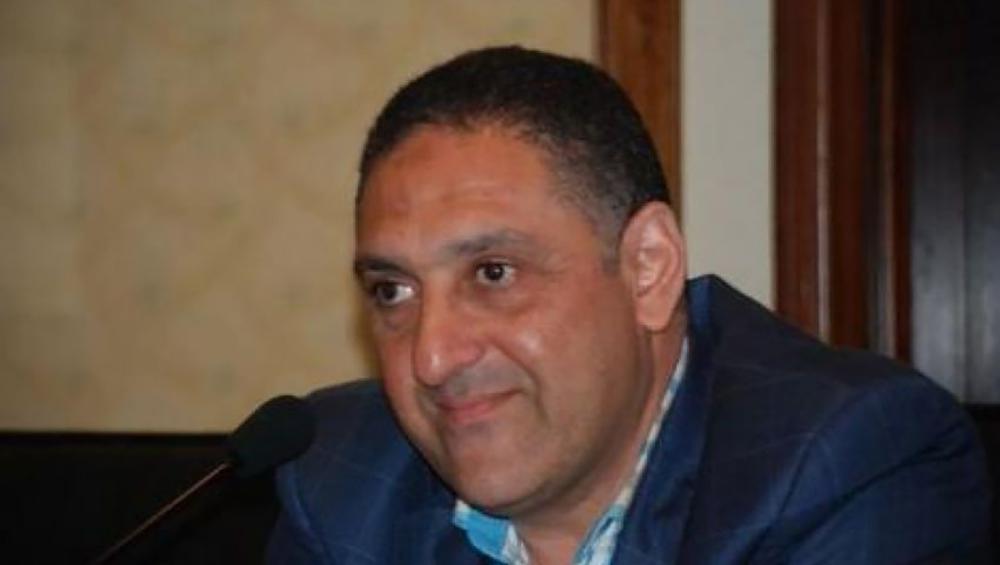
1. Egyptian journalist Hisham Gaafar before his detention in October 2015.

Egyptian authorities should immediately provide appropriate health care to the imprisoned journalist Hisham Gaafar, whose health, including his eyesight, is deteriorating in detention, Human Rights Watch said today. If prison authorities are unable to provide him necessary health care, they should allow him to seek care in private health facilities.
The Interior Ministry’s National Security Agency arrested Gaafar, director of the Mada Foundation for Media Development, a private media company, at his office in October 2015. Prosecutors have ordered Gaafar detained pending investigation on charges that include membership in the Muslim Brotherhood and illegally receiving foreign funds for his foundation, his lawyers told Human Rights Watch.

“Egypt’s Interior Ministry has shown contempt for Hisham Gaafar’s health and well-being,” said Sarah Leah Whitson, Middle East director at Human Rights Watch. “The fact that the Interior Ministry refuses to provide him his rightful care is a sad testament to Egyptian authorities’ disregard for detainees’ most basic rights.”

Gaafar, 53, has an eye condition – optic nerve atrophy – that requires ongoing specialist care or he may risk losing his sight altogether. He also suffers from a years-long prostate enlargement condition and risks complications if he does not receive the proper treatment. His eyesight is deteriorating and his health has worsened during his time in detention, in poor conditions, his family said.

Immediately following his arrest, police took Gaafar to his home, where officers seized his personal publications, work papers, computers, and phones, including those belonging to his wife and children. They detained his family inside the home for 17 hours. Security officers confiscated all his medical documents and reports and have not returned them to his family, despite their requests.

National Security officers then took Gaafar to an undisclosed location and held him for two days without access to his family or lawyers. His family heard of his whereabouts when a lawyer saw him by coincidence in the Supreme State Security Prosecution office in Cairo. Prosecutors have kept him in pretrial detention since then.

Under Egyptian law, prosecutors have broad power to hold those suspected of committing major offenses, including political and national security crimes, in pretrial detention for up to five months without regular judicial review, and judges can extend the detention for up to two years without requiring any substantive justification from prosecutors.

A judge should immediately review the necessity and legality of Gaafar’s detention and either send him to trial without further delays or release him, Human Rights Watch said.

During Gaafar’s time in detention, most of it spent in the maximum security Scorpion Prison in Cairo, the Interior Ministry’s Prisons Authority has not provided needed medicine but has intermittently allowed Gaafar to receive the eye vitamins and prostate medicine he required, after completely banning such supplies for the first two months of his detention. During those two months, his wife, Manar, told Human Right Watch, prison authorities kept Gaafar alone in a cell that, in his words, resembled a “tomb” without sunlight.

Later, they allowed his family very short and irregular visits, with no chance to verify whether he had received the medicine they had given to prison guards for him. Since March 2017, prison authorities have again denied him visits from relatives and his lawyer.

Before he was detained, Gaafar used special optic tools to read and glasses for everyday life. He also needed some assistance in his daily routine, his wife said. Prison authorities allowed his wife to deliver the glasses several months after his detention, but when they reached him, they were broken.

The way the glasses were broken suggested it had been deliberate, his wife said. She delivered new ones, but he has not had a new eye examination. His wife said that he recently told her he was not seeing as well as before, even with the glasses, suggesting his eyesight may have deteriorated.
Gaafar has had optic nerve atrophy in both eyes since he was a teenager, according to his wife.

Medical documents and reports from 2012, which she provided to Human Rights Watch after she retrieved them from a hospital, stated that at the time he had only 10 percent of his vision remaining in his left eye. Optic nerve atrophy has no cure, but it can be slowed by exposure to sunlight, medicine, and a healthy diet, his wife said doctors had told them. These are not available in adequate amounts to inmates at Scorpion Prison and many other Egyptian detention facilities.

A Human Rights Watch report on Scorpion Prison, published in 2016, documented cruel and inhuman treatment by officers of the Interior Ministry’s Prisons Authority that probably amounted to torture, including preventing food and medicine deliveries and other interference in medical care that may have contributed to prisoners’ deaths.
Gaafar’s wife said he appeared weak and to have lost significant weight during her March 2017 visit. She said she saw bite marks all over his body, which he said were from insects that had infested his cell due to a sewage leak. He told her he had suffered pain for weeks because he was sleeping on the concrete floor without a mattress. Human Rights Watch previously documented that Scorpion Prison authorities deny inmates a wide variety of basic necessities for hygiene and comfort, including beds, pillows, and mattresses.

In late February 2016, after a public outcry and growing criticism from the Journalists’ Syndicate, human rights organizations, and public figures, the authorities transferred Gaafar to the Tora Prison Hospital after he began suffering from urinary retention – the inability to fully empty his bladder.

Prison authorities then transferred him to al-Manial University Hospital, which is affiliated with Cairo University. Doctors who examined him there on March 4, and again on March 10, 2016, asked prison officials to allow him to be kept at Cairo University hospitals to prepare for more tests, including diagnostic surgery on his enlarged prostate, the apparent cause of the urinary retention.

Gaafar spent five months at the prisoners’ ward at Qasr al-Aini Hospital, where ill inmates who are hospitalized are usually held, but the authorities repeatedly failed to give Gaafar timely permission to go for needed tests. Human Rights Watch has previously documented that prison authorities pressure hospitals not to admit inmates or to return them without necessary treatment.

Gaafar told his wife that he received very little medical care there. In August 2016, the authorities sent Gaafar back to Scorpion Prison before he had undergone the examinations that he was told he needed. Prison authorities and Cairo University hospitals have not allowed Gaafar’s family to read or obtain a copy of the medical reports issued during his detention, his wife said.

The family managed to obtain the hospital discharge report through unofficial means, however, and provided a copy to Human Rights Watch. The report contained no detailed information on any tests Gaafar may have undergone or treatment received but stated that he suffers from “mild prostate enlargement" and that "the patient needed no surgical intervention.” The report did not state what caused the enlargement or whether it was benign or cancerous – a primary concern for the family.

A couple of days after returning to prison, Gaafar found blood in his urine, and officers transferred him again to Tora Prison Hospital. But the facilities there lack a urology specialist, his wife said, and the prison authorities have refused to arrange for Gaafar to be seen by one. He appeared before a court in August 2016 carrying a urinary catheter, his lawyers said.

His wife said that after filing several complaints, a National Security officer visited Gaafar in detention in November 2016, and told him, “don’t worry, we will treat you.” But Gaafar’s request to seek treatment in a private health facility was ignored.

One of his lawyers and his wife both told Human Rights Watch that prosecutors never allowed them to obtain a copy of the official charges against him or the rest of his case file. However, Hossam al-Sayed, another Mada Foundation journalist who was arrested with Gaafar on the same day, was released without bail in March 2016, said the lawyer Karim Abd al-Rady of the Arab Network for Human Rights Information (an independent rights group).

Under an amendment to the penal code decreed by President Abdel Fattah al-Sisi in September 2014, Gaafar could face a 25-year sentence if convicted of receiving foreign funds illegally.

Prisoners have the right to the highest attainable standard of physical and mental health guaranteed in the International Covenant on Economic, Social and Cultural Rights, which Egypt ratified in 1982.

The Committee Against Torture, the monitoring body of the Convention against Torture and Other Cruel, Inhuman or Degrading Treatment or Punishment – ratified by Egypt in 1986 – has found that failure to provide adequate medical care can violate the treaty’s prohibition of cruel, inhuman, or degrading treatment.

“It is deeply concerning that Egypt’s judiciary has become complicit in human rights violations by cruelly detaining people like Gaafar for years without justification, exposing them to serious abuse and harm,” Whitson said.

Monday, July 31, 2017

Egypt police kill protester, injure 50 others in clashes over Nile island

Associated Press
Egypt Says 1 Killed, 50 Injured in Clashes on Nile Island 
 
July 16, 2017 

HAMZA HENDAWI

Egyptian authorities say police have fired tear gas to disperse a rock-pelting crowd of residents on a River Nile island in Cairo, clashes that left one person killed and 50 others injured.


CAIRO (AP) — Egyptian police on Sunday fired tear gas to disperse a rock-pelting crowd of residents defending their homes on a Nile River island against bulldozers sent by the government to demolish their illegally-built dwellings. The clashes left one person dead and 50 others injured.

The violence on the island of el-Waraq on the southern fringes of Cairo is likely to stain a nationwide campaign launched this summer by Abdel-Fattah el-Sissi, Egypt's general-turned-president, to restore government control over state-owned land.

El-Sissi has vowed in televised comments to show no lenience to anyone taking illegal advantage of state-owned property, saying the law would prevail regardless of how powerful or wealthy the offenders were. Anyone using land that does not rightfully belong to them, he angrily said, is a "common thief."

Illegal use of state land is widespread in Egypt, as well as building on agrarian land in violation of the law. Since el-Sissi launched his campaign earlier in the summer, local media has been showing images of police and army troops demolishing buildings illegally built or operating without a license, attempting to project an image of a government keen on protecting what is being billed as "people's property."

To el-Waraq's middle class and poor residents, however, the sight of bulldozers coming to demolish their homes may have been more than they could bear at a time when they, like most Egyptians, are struggling to cope with soaring prices for food and services, a result of ambitious reforms introduced by el-Sissi's government to revive the country's battered economy.

"Get lost! Get lost!" the protesters shouted at the scores of policemen who descended on the island early Sunday, backed by bulldozers, scores of riot policemen and led by senior police generals. The protesters, mostly young males, succeeded in forcing the bulldozers to turn away, but clashes soon began.

The Health Ministry said a resident died and another 19 were wounded in the clashes. It did not say how the man, Sayed el-Tafshan, died, but a photo of his body posted on social media networks showed chest wounds compatible with birdshot.

The Interior Ministry, which controls the police, said its forces only used tear gas.

A ministry statement said a total of 31 people — policemen as well as contractors who arrived with them on the island — were injured in the clashes. The injured policemen included two generals.
Ten residents were arrested for their part in the violence, it added.

Video clips posted on social media networks showed hundreds of angry islanders, mostly young men, at the man's funeral, marching through farm fields while chanting "We will sacrifice the martyr with our soul and blood."

The statement said the residents attacked police with firearms, birdshot guns and rocks, and that police responded with tear gas. It said up to 700 building and land violations were recorded on the island. It acknowledged the death of one islander and that 19 others were injured.

In el-Waraq, a mostly agricultural island with shoddily built apartment blocks, residents maintain that their homes are legal, citing the government's supply of drinking water and electricity.

One of the Nile's largest islands in Egypt, it is home to nearly 200,000 people and is linked to the mainland by six ferries.

"How is my home illegal when you have for years provided me with water and electricity," said resident and civil servant Mahmoud Essawi. "It's our land and we are not leaving."

In a separate development, Egypt's military said its jet fighters destroyed 15 all-terrain vehicles carrying weapons and explosives along with "criminal elements" after they were detected getting ready to cross the Libyan border into Egypt.

A military statement Sunday said the warplanes monitored and "dealt" with the vehicles over the past 24 hours, but it did not say whether the airstrikes targeted them while on Egyptian soil. It also did not mention Libya by name, making only a thinly veiled reference to the North African nation.

*Photo by Mostafa Darwish, courtesy of AP

Friday, June 30, 2017

Traitor Sisi ratifies agreement handing over two Egyptian islands to KSA

Mada Masr
Sisi ratifies Tiran and Sanafir agreement, cedes islands to Saudi Arabia

Saturday, 24 June 2017


Image may contain: one or more people

President Abdel Fattah al-Sisi ratified the maritime border demarcation agreement that cedes sovereignty over Tiran and Sanafir islands to Saudi Arabia on Saturday, according to a Cabinet statement.

The Tiran and Sanafir agreement was passed with a majority in Parliament on June 14, with only 119 MPs voting against it.

Sisi was able to seal the deal with Saudi Arabia after the Supreme Constitutional Court temporarily froze two contradictory rulings, one issued by the State Council in January and the other by the Court of Urgent Matters in April, on Wednesday.

In June 2016 the State Council’s Court of Administrative Justice (CAJ) annulled the agreement signed by Prime Minister Sherif Ismail in April of the same year. This was followed by two Court of Urgent Matters rulings on September 29 and December 31 to overturn the CAJ’s decision.

However, on January 16, the State Council’s Supreme Administrative Court upheld the initial June ruling, stating that the deal was a concession of territory, an act that is prohibited per Article 151 of the Constitution. On April 2, the Court of Urgent Matters overturned the CAJ’s decision.

Several political parties and prominent politicians held a press conference on June 12, ahead of Parliament’s discussion of the deal, to announce a series of sit-ins protesting the agreement which many members of Egypt’s opposition hailed as unconstitutional.

The presser was attended by dozens of activists and members of several political parties, as well as former presidential candidates Hamdeen Sabbahi and Khaled Ali. Also in attendance were ousted chief of the Central Auditing Authority Hesham Geneina, expelled member of Parliament Mohamed Anwar Sadat, critical journalist Khaled al-Balshy, National Council for Human Rights member George Ishaq and former Ambassador Masoum Marzouk.

Following Parliament’s approval, hundreds of members of professional syndicates signed statements in opposition to the Tiran and Sanafir agreement, including 850 journalists, 620 members of the Engineers Syndicate’s general assembly and more than 600 members of the Cinema Syndicate, among others.

Since the June press conference security forces have carried out an extensive arrest campaign across several governorates, apprehending more than 120 activists and protesters seen to oppose the deal.

Court reduces 3-year sentences issued against 32 cement workers, to 2 months

Mada Masr
Appeals court reduces 3-year sentences for 32 Tourah Cement Company workers, upholds obstruction of justice charge

Monday, 19 June 2017

Jano Charbel


The three-year prison sentences handed to 32 Tourah Cement Company security workers earlier this month were reduced on Sunday to two months in a ruling by the Maadi Appeals Court.

Maadi Criminal Court announced the initial prison terms on June 4 on charges that asserted the workers had assaulted a police captain, obstructed justice and used violence to resist authorities.

According to the findings of the Maadi Appeals Court published by the Arabic Network for Human Rights Information (ANRHI), the court dismissed all criminal charges leveled against the 32 workers in its Sunday ruling, except the charge of resisting authorities, as it found them guilty of obstructing police efforts to apprehend a wanted worker by collectively assisting in his escape.

Lawyer Gamal Eid, the director of the ANRHI, stated that the appeals court’s Sunday ruling represented a move “from grave injustice, to lesser injustice.”

The appeals court’s Sunday ruling was based on Article 375 of Egypt’s Penal Code. “Anyone who uses force, violence, terrorism, threats or illegal measures to attack or attempt to attack authorities is liable to imprisonment for a period not exceeding two years and a fine not exceeding LE 100,” the article asserts.

The workers are currently being held in the 15th of May prison, located on the outskirts of Cairo.

Those implicate in the case were among the 75 full-time security personnel that initiated a sit-in in March, demanding full-time contracts and retroactive payment of wages, as some had worked full time at the company for up to 10 to 15 years on temporary or part-time contracts.

Police arrested 32 workers of the workers on the Tourah Cement Company’s grounds on May 22. The prosecutor referred them to trial the following day, and the court proceedings commenced on May 28.

The Tourah Cement Company – which had requested the deployment of police forces to disperse the workers’ sit-in protest – has not stated whether it will meet workers’ demands for full-time employment and benefits and reinstate those that have been arrested.

Lawyer Haiytham Mohamadein expressed skepticism that those who had been involved in the sit-in would be allowed back into the company, let alone be reinstated to their former jobs with full-time contracts and benefits. Mohamadein said that the Tourah Cement Company is seeking to employ new security workers through a private contracting company.

A host of organizations and individuals, both in Egypt and abroad, have expressed solidarity with the imprisoned Tourah Cement Company workers in a petition calling for the release of the 32 detainees.

Messages of international solidarity also have poured in from dozens of trade unionists and labor activists from Australia, Austria, Canada, Spain, UK, USA, among other countries.

The Tourah Cement Company workers are the latest labor group to be arrested and referred to trial for industrial action. In April, police arrested 16 protesting Telecom Egypt Company workers in Cairo, while in January police forces forcefully dispersed a sit-in at the IFFCO Oils Company in the Suez Governorate, briefly arresting scores of workers.

In December 2016, police were deployed to disperse two sit-ins at the privately owned Egyptian Fertilizers Company (EFC) and the Egyptian Basic Industries Corporation (EBIC), both of which are owned by the billionaire Nassif Sawiris.

In September 2016, police conducted dawn raids at the apartments of bus drivers from the Public Transport Authority who had been planning a partial strike, detaining six drivers, two of whom may still face trial. In May 2016, military police surrounded a sit-in led by Alexandria Shipyard Company workers and imposed a lockout on the company. Twenty-six civilian workers were referred to military trial.

Syndicates mobilize against handover of Tiran & Sanafir islands

Mada Masr
Syndicates mobilize against Tiran and Sanafir agreement

Monday, 19 June 2017

Image may contain: 7 people, people smiling, text

Hundreds of members of professional syndicates have signed statements in opposition to Parliament’s recent approval of the Tiran and Sanafir agreement, brokered by Egypt and Saudi Arabia in April 2016.

Eight hundred and fifty journalists issued a statement on Sunday announcing that they reject the agreement, which concedes sovereignty over the two Red Sea islands to Saudi Arabia, describing it as invalid and “demanding that state institutions respect the Constitution and the law, and the blood of martyrs who defended Egyptian land.”

The Journalists Syndicate announced that it would launch an investigation into the sit-in held in its headquarters on Wednesday, protesting the agreement.

Hatem Zakareya, a member of the syndicate’s board, told Mada Masr that no request was submitted before the protest, in violation of the syndicate’s bylaws. He added that investigations will also be launched into footage aired on Al Jazeera and other pro-Muslim Brotherhood channels from inside the building and its entrance showing non-syndicate members attending the protest.

Gamal Abdel Rehim, one of four syndicate board members who signed a statement rejecting the agreement, told Mada Masr that allegations that Muslim Brotherhood-affiliated channels entered the syndicate are untrue, arguing that it is not necessary to submit a request before initiating sit-ins at the syndicate.

“Never in the history of the syndicate has any group submitted a request to start a sit-in,” he said, adding that it is common for non-syndicate members to join political action taking place within the syndicate.

A statement was also signed by 620 members of the Engineers Syndicate’s general assembly denouncing the deal, labeling it unconstitutional. The statement criticized “attempts to pressure opposition and the blocking of websites that attempt to reveal the truth of the matter.”

The statement mirrors that issued by the Journalists Syndicate, calling on citizens to exercise their constitutional right to express their opinions peacefully “in defense of the blood of the martyrs who died to defend the unity of Egyptian land.”

Head of the Engineers Syndicate Tarek al-Nabarawy said last Friday that in his personal opinion the islands are Egyptian, adding that the syndicate should not be involved in politics.

Akram Ismail, member of the Engineers Syndicate and the Bread and Freedom Party told Mada Masr: “Major national causes cannot be separated from syndicate work,” adding that syndicates, parties and social media are the only remaining platforms for political action following the crackdown on the street movement and blocking of websites.

Ismail said that the fact that three leading figures in the syndicate expressed their opposition to the agreement on their personal Facebook pages indicates the syndicate’s position, even if no official statement was made.

Members of the Cinema Syndicate also released a statement inviting people to protest the transfer of the islands “using all peaceful and legal means.”

They called for a protest at their headquarters on Saturday to oppose the agreement, however the protest was canceled due to the heavy security presence in the area.

Six members of the Doctors Syndicate board also announced their opposition to the agreement in a statement. However Mona Mina, the syndicate’s secretary general, wrote on her Facebook page: “As a vocational institution, the syndicate has nothing to do with this important political and national cause.”

Members of the Lawyers Syndicate also held a protest inside syndicate headquarters on Tuesday to express their objection.

Since discussions of the maritime border agreement reached Parliament, security forces have carried out an extensive arrest campaign across several governorates, targeting activists and protesters opposing the deal.

Egypt authorities refuse presence of Italy prosecutors during questioning of police who probed Giulio Regeni

ANSA News
Egypt No to Italy Regeni prosecutors 

Slain researchers' parents meet Pignatone

Friday, 16 June 2017

(ANSA) - Rome  - Egyptian authorities have turned down a request from Rome prosecutors probing the Cairo torture and murder of Giulio Regeni to be present at the questioning of Egyptian police officers who carried out investigations into the Friuli-born Cambridge University researcher.   

They said Egyptian law forbids the presence of foreign magistrates during judicial activity. Regeni's parents Claudio and Paola were informed of the refusal during a meeting Friday with Rome chief prosecutor Giuseppe Pignatone and his assistant Sergio Colaiocco.  

Cairo prosecutors have, however, sent their Italian counterparts a second report on testimony from the seven policemen who probed Regeni, who disappeared on January 25 2016 and whose mutilated body was found on the road to Alexandria eight days later.   

The testimony is a summary of what the agents said and not their testimony in full, judicial sources said.   

Italian magistrates are hoping for a third tranche of documents, starting with questioning of the national security chief who investigated Regeni a few days before his disappearance, as well as testimony given in March 2016 by the agent who searched the home of the alleged head of a kidnapping gang suspected of abducting and robbing foreigners.

Regeni, 28, went missing in the Egyptian capital on January 25, 2016, on the heavily policed fifth anniversary of the uprising that ousted former strongman and president Hosni Mubarak.

His severely tortured, mutilated body was found on February 3 in a ditch on the city's outskirts.   

Egypt has denied speculation its security forces, who are frequently accused of brutally repressing opposition, were involved in the death of the Cambridge doctoral student.

Regeni was researching street vendors' trade unions, a sensitive topic.   

Egyptian and Italian prosecutors have been working on the case but Rome has yet to send a new ambassador to Cairo in protest at the lack of progress.

"Italy has mourned the killing of one of its studious young people, Giulio Regeni, without full light being shed on this tragic case for a year and despite the intense efforts of our judiciary and our diplomacy," President Sergio Mattarella said on the first anniversary of Regeni's disappearance.   

"We call for broader and more effective cooperation so that the culprits are brought to justice".   

Premier Paolo Gentiloni expressed his support for Regeni's family and said his government was determined to get to the truth.   

Foreign Minister Angelino Alfano echoed his words and said that the young man's death "deprives all of us of a generous heart that could have done a great deal for others".   

The message on the foreign ministry website said that "the tragic death of Giulio Regeni is still an open wound not only for his family, who remain in our thoughts, but for our entire country."   

A video recently surfaced in which the head of the Cairo street traders' union, Mohammed Abdallah, secretly filmed Regeni asking him questions about the union using a police shirt-button microcamera.

Abdallah said he was doing his patriotic duty because Regeni, he said, was a spy.   

Egypt has furnished several explanations for Regeni's death ranging from a car accident to a gay fight to a kidnapping, all of which have been dismissed by Italy. 

Suspicion has fallen on seven members of the Egyptian police and intelligence services who used Abdallah as an informant and who later were responsible for wiping out the alleged kidnapping gang.   

Regeni's personal documents were allegedly found in the house of the sister of one of the alleged gang's members.    

There seem to have been signs of Egyptian cooperation on Giulio Regeni's death thanks to the work of Rome prosecutors but there is absolutely no evidence of true cooperation from Egyptian authorities, Regeni's parents said recently.   

Paola and Claudio Regeni urged that Italy's ambassador to Cairo not return to Egypt, since this "would give a signal of detente that must not be given", and stressed the importance of not sending Egypt spare parts for F35 fighter jets until justice has been served.

At least 60 opponents arrested in connection to Tiran & Sanafir handover

Mada Masr
Rights Monitor: Police have arrested 60 opponents of the Tiran and Sanafir agreement 

Friday, 16 June 2017

Image may contain: one or more people, people standing and text

Police have arrested a total of 60 people connected to political action against the agreement to concede sovereignty over Tiran and Sanafir islands to Saudi Arabia, according to the Freedom for the Brave campaign.

The nationwide arrests commenced after Parliament approved the agreement on Wednesday night, with police moving to detain political activists and party members in Cairo, Alexandria, Damietta, Sharqiya, Beni Suef, Fayoum, Luxor, Port Said and Suez.

Lawyer Mohamed Abdel Aziz told Mada Masr that those arrested come from several political parties, including the Socialist Popular Alliance Party, the Constitution Party, the Bread and Freedom Party, the Popular Current Party and the Karama Party, as well as from Egypt’s independent activist community, all of whom voiced their opposition to the agreement.

According to Abdel Aziz, security forces arrested many of the activists and party members from their homes, including Hassan Ahwany who is being questioned by the Dokki prosecution in Cairo and is being represented by Abdel Aziz.

Many of those arrested will be questioned by prosecutors on Friday, including six people who were arrested in Port Said and Tanta, according to the Front to Defend Egyptian Protesters.

The FDEP has added that activists Mahmoud Nagib and Israa Fahid face charges of incitement to protest and obstructing public transportation, and that three people arrested in Luxor on Thursday are in the National Security Agency’s custody. In Ismailia, Constitution Party member Ahmed Santos was questioned by the prosecutor, who has issued Santos a 15-day detention order pending an NSA report.

According to lawyer Abdel Aziz Yousef, the prosecutor issued Egyptian Social Democratic Party member Islam Marei a 15-day detention order pending investigation into charges of incitement against the regime; insulting state institutions, including the Armed Forces, police and the judiciary; distributing anti-government flyers; and using social networks for incitement against state institutions.

Abdel Aziz described the arrests as “ferocious,” saying security forces are attempting to prevent any mobilization against the Tiran and Sanafir agreement. The scope of the arrests, he asserted, is disproportionate to the protests that have taken place in reaction to the agreement.

Police arrested eight people in the proximity of the Journalists Syndicate’s headquarters in downtown Cairo on Wednesday night, which was the site of a protest against the Tiran and Sanafir agreement. All eight were released yesterday on LE10,000 bail.

Police also dispersed a demonstration on Wednesday in front of the Egyptian Social Democratic Party’s headquarters in downtown Cairo, barricading the protesters inside the building, according party member Ziad al-Eleimi.

32 Cement Workers Sentenced to 3 yrs in Prison - For Peacefully Protesting

Mada Masr
Court sentences 32 workers from Tourah Cement Company to 3 years imprisonment for protesting

Sunday June 4, 2017

Jano Charbel


Thirty two Tourah Cement Company workers were sentenced to three years in prison by the Maadi Misdemeanors Court on Sunday. They were arrested after security forces broke up a sit-in at the company in May.

The workers faced charges of assaulting a police captain, obstructing justice and using violence to resist authorities. All defendants are currently being held in at the 15th of May prison.

According to lawyer Haitham Mohamedein the defense team will appeal against Sunday’s verdict within 10 days of the verdict.

He told Mada Masr that although the trial was held before justices from the Maadi Misdemeanors Court, they convened at the Tourah Police Academy. The trial, which took place over two sessions was initially scheduled for May 28, however it was adjourned until Saturday after police personnel failed to transport the defendants to the trial.

“The workers’ families and friends were not allowed to attend these trial, and there were no journalists present during,” he added.

They were arrested after staging a sit-in in March that lasted several weeks before it was forcefully dispersed by security forces on May 22. Seventy five security personnel initiated the protest to demand full-time contracts and the retroactive payment of wages as some have worked full-time at the company for up to 15 years on temporary or part-time contracts.

Mohamedein criticized the court for issuing the harshest penalties against the protesting workers. He told Mada Masr last week that the charges are trumped-up and baseless, adding that “the Interior Ministry appears to have decided that it wants to extend the legal proceedings.”

The workers’ defense team and media reports claim that the judge presiding over this trial condemned them for initiating the sit-in, even before the conclusion of the court’s hearings. “A judge should only express their decision while issuing a verdict,” Mohamedein told Mada Masr.

The judge is also reported to have claimed that labor strikes are criminal, despite the fact the none of the charges were related to striking as there had been no work stoppages or slowdowns, and even though Article 15 of the Constitution safeguards the right to strike.

A petition protesting the workers arrests has been endorsed by 12 labor unions, political parties and groups and over 250 individuals. It claims that the detainees were physically abused, treated in a degrading manner and had their personal belongings stolen while in custody.

A worker who had been protesting at the company told Mada Masr last week, on condition of anonymity, that four of the detained workers had been hospitalized. They could not confirm the exact reasons for this, “as we have not been able to speak directly with our detained coworkers since their arrests, and because they were not brought to their court session.”

Mohamedein said that the workers had been “entirely peaceful and nonviolent” and, responding to accusations that they assaulted an officer, he explained that no medical report had been filed or evidence filed.

The protest followed the company’s refusal to compensate the family of a security guard who was killed during an altercation with people thought to be stealing property from company grounds. The company board claimed the deceased security guard was not entitled to any compensation or insurance because he was a part-time employee.

The board’s claim flouted a previous court verdict. In May last year, the workers filed a lawsuit against the company before the Appeals Court, which ruled that they were entitled to the company’s profit-sharing scheme, healthcare and other employment rights.

The recent crackdown on labor-related protests in Egypt has seen security forces break up several sit-ins and protesting workers stand trial. In April police arrested 16 protesting Telecom Egypt workers and December 2016 saw security break up sit-ins at two of billionaire Nassif Sawiris’ companies.

In an ongoing case 26 Alexandria Shipyard Company workers are currently standing military trial, accused of inciting workers to strike. The military trial of these civilian workers has been adjourned 12 times, and is currently scheduled to take place on June 20.

Wednesday, May 31, 2017

Police arrest 32 workers following dispersal of sit-in at Tourah Cement Company

Mada Masr 
Police arrest 32 workers following dispersal of sit-in at Tourah Cement Company

Wednesday May 24, 2017


Jano Charbel


Security forces dispersed a sit-in held by workers demanding full-time contracts, as per a previous court ruling, at the privately owned Tourah Cement Company in southern Cairo on Monday. They detained 22 workers during the dispersal, arresting 10 more that evening and issuing warrants for an additional three.

Lawyer Haitham Mohamedein told Mada Masr that the 32 arrested workers were detained overnight, and are currently being held at the Maadi and Dar al-Salam police stations. They have been referred to trial, set for May 28, on charges of assaulting a police captain, obstructing justice and using violence to resist authorities.

The workers did not resist arrest or assault police, nor was the sit-in dispersed violently, Mohamedein explained, adding that they should not have been detained for peacefully demonstrating.

Dozens of police personnel, including Central Security forces, were deployed to raid the sit-in on company grounds at 2 am Monday morning.

Mohamadein said they were deployed following allegations that the protesting workers assaulted an officer. The lawyer asserted that the sit-in was entirely peaceful and did not obstruct work at the company.

According to local news outlets defense lawyers attending interrogations have also questioned the allegations that the officer was collectively assaulted by the workers as he allegedly showed no signs of bruising.

“There was no medical report indicating that the officer had been assaulted, nor was there even evidence presented to show that his clothes had been torn apart, or anything of the sort,” Mohamadein added.

Several workers went to the prosecutor’s office after the arrests to express solidarity with their colleagues.

One of the protesting workers told the privately owned Al-Mal newspaper on Monday that despite the arrests the sit-in was ongoing. However, according to Mohamadein it was called off after the second round of arrests as there aren’t enough staff to stage protests between shifts.

A total of 75 full-time employees, all employed as security personnel, have been protesting for 55 days demanding full-time contracts, and the retroactive payment of wages. Some have worked full time at the company for up to 10-15 years on temporary or part-time contracts, which don’t carry the same benefits or employment rights as full-time contracts, with wages calculated on a different basis.

The sit-in was initiated following the murder of a security guard at the company earlier this year. He died during an altercation with thieves on company grounds, however the board declined to provide his family with compensation or insurance, claiming he was a part-time employee.

It also follows the company administration’s refusal to uphold a previous court verdict. The workers filed a lawsuit against the Tourah Cement Company’s administration, and, in May 2016, a Cairo Appeals Court ruled in their favor, determining that they were entitled to the company’s profit-sharing scheme, healthcare and other employment rights.

There is a local workplace labor union for Tourah Cement Company employees, affiliated to the state-run Egyptian Trade Union Federation (ETUF), however without full-time contracts the protesting workers are not eligible to join, Mohamedein said. He added that no local or ETUF union members have expressed support of the workers.

A number of labor-related protests nationwide have been dispersed by security forces in the last few months.

In January, security forces forcefully dispersed a sit-in at the IFFCO Oils Company in Suez, and in April police arrested 16 protesting Telecom Egypt workers. In December 2016, police were deployed to disperse two sit-ins at billionaire Nassif Sawiris’ companies — the Egyptian Fertilizers Company and the Egyptian Basic Industries Corporation.

In September 2016, police forces conducted dawn raids on the apartments of bus drivers who had been planning a partial strike, detaining six of them. In May 2016, military police surrounded a sit-in led by workers at Alexandria Shipyard Company, and imposed a lockout on the company. Twenty-six of the civilian workers were subsequently referred to military trial.

Amnesty International issued a statement in April denouncing Egypt’s “relentless assault on rights of worker and trade unionists,” adding, “Demanding your labor rights and expressing your grievances should not be a criminal offense.” The right to strike and peaceful assembly are enshrined in both Article 15 of the Constitution and international human rights conventions that Egypt is party to.

In February, Human Rights Watch also issued a statement criticizing security forces’ heavy handed response to non violent labor protests, calling on Egyptian authorities to either drop charges against detained workers, or change domestic laws restricting the right to organize and strike.

UN rights chief says Sisi crackdown "facilitates radicalisation"

REUTERS
UN rights boss says Egypt crackdown 'facilitates radicalisation'

Mon May 1, 2017


U.N. High Commissioner for Human Rights Zeid Ra'ad al-Hussein said on Monday that heavy-handed security measures by Egypt were fostering the very radicalisation it was looking to curb.

Egypt last month was shaken by one of the bloodiest attacks in years when Islamic State suicide bombers targeted two Christian churches, killing 45 people. President Abdel Fattah al-Sisi declared a three-month state of emergency hours later.

Zeid condemned the church attacks at a news conference in Geneva but said that Egypt's approach to combating Islamist militants was exacerbating the problem.

"...a state of emergency, the massive numbers of detentions, reports of torture, and continued arbitrary arrests - all of this we believe facilitates radicalisation in prisons," Zeid said.
 

She said "the crackdown on civil society" was "not the way to fight terror."

Responding, Foreign Ministry Spokesman Ahmed Abu Zeid called the remarks an "irresponsible" and "unbalanced" reading of the situation in Egypt, where society is targeted by "terrorist operations," according to a statement from the ministry.

Abu Zeid defended the emergency law as passed by an elected parliament subject to "rules and restrictions" set out by the constitution.

"We don't see the High Commissioner criticizing other states implementing states of emergency that are dealing with similar conditions," the statement said.

Sisi, elected in 2014 in part on a pledge to restore stability to a country hit by years of turmoil since its 2011 uprising, has sought to present himself as an indispensable bulwark against terrorism in the Middle East.

Rights groups, however, say they face the worst crackdown in their history.

"National security yes, must be a priority for every country, but again not at the expense of human rights,” said Zeid.


*Photo by Pierre Albouy courtesy of REUTERS
**Reporting by Stephanie Nebehay; Writing by Eric Knecht; Editing by Robin Pomeroy

Monday, May 1, 2017

Increasing crackdowns on labor protests; Decrease in workers' strikes

Mada Masr
What does the cooperation Sisi called for in his Labor Day address mean amid a marked deterioration in labor rights and freedoms?


President Abdel Fattah al-Sisi presided over the state’s official Labor Day commemoration on Sunday, organized by the state-controlled Egyptian Trade Union Federation, delivering a 10-minute televised address from the luxurious Al-Massa Hotel in Cairo.

“Egypt still expects much from its workers,” the president said, in one of several statements emphasizing workers’ cooperation with the state.


What Sisi did promise centered on increased foreign investment — a central tenet of the government’s economic structural adjustment whose efficacy is contested — saying that it would translate into increased employment opportunities for Egypt’s youth and decent living standards for the country’s workers.

This is in addition to promising to recommence operations at hundreds of factories that have remained closed since 2011, by allocating resources from the Tahya Masr Fund and to push a spate of labor-related legislation — including the unified labor law, trade union law, health insurance law, and social insurance law — through Parliament.

Nonetheless, there is a more stark reality for Egypt’s workers. Parliament is stacked against labor interests and the legislative body’s manpower committee is virtually controlled by the ETUF, whose leadership has not been elected since 2011 and is instead appointed by Manpower Minister Mohamed Saafan. Sisi and Parliament have extended the ETUF executive board’s terms of office several times, with the latest occurring in January 2017.

There have also been severe crackdowns against labor movements, with police and the Armed Forces jailing dozens of workers who participated in industrial action, and the prosecution referring them to trial. Simultaneously, the number of industrial protests has decreased to its lowest level in several years, falling from 1,117 strikes between May 2015 and April 2016, to 744 in the same period the following year.

To mark Labor Day, Amnesty International issued a statement on Sunday calling on the Egyptian state to end its “Relentless assault on rights of workers and trade unionists.” Human Rights Watch adopted a similar tone in a February statement, calling on Egyptian authorities to “Drop charges, change laws that restrict rights to organize and strike.”

The independent Egyptian initiative Democracy Meter issued its latest figures on Sunday regarding the number, location and causes of labor strikes and professional protests that occurred between May 2016 and April 2017.

According to the institute’s tally, at least 151 workers, unionists and professionals have been arrested, prosecuted or referred to trial over the course of the past 11 months. During this same period, 2,691 workers and professionals were dismissed from their jobs “for exercising their right to protest.”

Cairo was the site of the most labor action in Egypt over the past year, according to Democracy Meter’s figures, tallying 151 initiatives. After Cairo comes the Nile Delta governorates of Kafr al-Sheikh, with 68 initiatives, and Sharqiya, with 65.

The 26 Alexandrias Shipyard Company workers who are standing in a military trial plagued by numerous adjournments is one of the more prominent cases to have occurred in the past year. Other notable cases include the detention of six bus drivers from the Public Transport Authority in Cairo, 21 workers from the IFFCO Oils Company in Suez, scores of workers from the Egyptian Fertilizers Company and Egyptian Basic Industries Company in Suez, and 16 workers from Telecom Egypt Company.

While the state’s austerity measures have worsened labor and living conditions, workers efforts to push back have been curtailed, according to Mohamed Awwad, the lawyer for the 26 Alexandria Shipyard Company workers.

“Any worker who attempts to publicly demand their rights these days usually thinks twice before doing so, as the state will likely respond to peaceful protest actions with forceful and oppressive measures,” he says.

Awwad says that 19 of the 26 shipyard workers who are standing military trial have been persuaded to tender their resignations in exchange for assurances that they would not be jailed pending their military trial. Since the forced dispersal of the labor protest at the Defense Ministry-owned shipyard in May 2016, some 1,000 workers of a 2,300-person workforce have not been allowed back to work and are earning only half of their basic wages, according to the lawyer.

The string of police crackdowns on labor strikes in the Suez Governorate is symbolic, according to Ahmed Bakr, the secretary general of the Independent Union of Workers at the IFFCO Oils Company. “[The crackdown] aims to send a message to workers, that your protests or strikes will be deemed illegal and the state will only uphold the rights of big businessmen and investors.”

Bakr and all eight other members of the Independent Union of Workers at the IFFCO Oils Company, in addition to 12 other workers, stood trial in the Suez Governorate in January 2017. They have since been acquitted of charges of instigating a strike and obstructing production. However, the prosecution appealed the court’s decision, a second trial was held March before the Suez Appeals Court, which also opted for an acquittal.

“These labor rights (right to strike, and organize) are supposed to be safeguarded in the Egyptian Constitution. However, the reality in Egypt is quite different,” says Seif, the son of jailed PTA bus driver and independent unionist Mohamed Abdel Khaleq.

Abdel Khaleq and his coworker Ayman Abdel Tawwab were held in Tora for nearly seven months for planning a strike in September 2016, before being granted conditional release in March. Per the terms of his release, Abdel Khaleq must submit himself to Cairo’s Sharabiya Police Station two days a week, for nearly four hours at a time. The PTA workers still face the possibility of trial.


Egypt’s independent trade unions are organizing their own Labor Day conference, which is scheduled for the evening of May 1 at the headquarters of the Center for Trade Union and Workers Services (CTUWS) in Cairo. The event is being held under the title “Social Justice and Union Freedoms.”

Since July 2013, there have not been any Labor Day rallies, marches or public protests in Egypt.