Showing posts with label Shias. Show all posts

Saturday, September 30, 2017

KSA Religion Textbooks Promote Intolerance


HUMAN RIGHTS WATCH

Saudi Arabia: Religion Textbooks Promote Intolerance
 

Textbooks Disparage Sufi, Shia; Label Jews, Christians ‘Unbelievers’


September 13, 2017 


Saudi Arabia’s school religious studies curriculum contains hateful and incendiary language toward religions and Islamic traditions that do not adhere to its interpretation of Sunni Islam, Human Rights Watch said today. The texts disparage Sufi and Shia religious practices and label Jews and Christians “unbelievers” with whom Muslims should not associate.

A comprehensive Human Rights Watch review of the Education Ministry-produced school religion books for the 2016-17 school year found that some of the content that first provoked widespread controversy for violent and intolerant teachings in the aftermath of the September 11, 2001 attacks remains in the texts today, despite Saudi officials’ promises to eliminate the intolerant language.

“As early as first grade, students in Saudi schools are being taught hatred toward all those perceived to be of a different faith or school of thought,” said Sarah Leah Whitson, Middle East director at Human Rights Watch. “The lessons in hate are reinforced with each following year.”

This research was part of a broader investigation into Saudi officials and religious clerics’ use of hate speech and incitement to violence for an upcoming Human Rights Watch report. The reviewed curriculum, entitled al-tawhid, or “Monotheism,” consisted of 45 textbooks and student workbooks for the primary, middle, and secondary education levels. Human Rights Watch did not review additional religion texts dealing with Islamic law, Islamic culture, Islamic commentary, or Qur’an recitation.

The United States Department of State first designated Saudi Arabia a “country of particular concern” under the International Religious Freedom Act for particularly severe violations in 2004. It has continued to do so every year since. The designation should trigger penalties, including economic sanctions, arms embargoes, and travel and visa restrictions. But the US government has had a waiver on penalties in place since 2006. The waiver allows the US to continue economic and security cooperation with Saudi Arabia unencumbered.

Saudi Arabia has faced pressure to reform its school religion curriculum since the September 11 attacks, particularly from the US, after it was revealed that 15 of the 19 hijackers were Saudi citizens. Saudi officials have said repeatedly they will carry out these reforms, although past reviews of the curriculum over the last dozen years have shown these promises to be hollow. In February 2017, Saudi’s education minister admitted that a “broader curriculum overhaul” was still necessary, but did not offer a target date for when this overhaul should be completed.

Saudi Arabia does not allow public worship by adherents of religions other than Islam. Its public school religious textbooks are but one aspect of an entire system of discrimination that promotes intolerance toward those perceived as “other.”

As Saudi Arabia moves towards implementing its Vision 2030 goals to transform the country culturally and economically, it should address the hostile rhetoric that nonconforming Sunni Muslims, Shia Muslims, and non-Muslim expatriate workers face in Saudi Arabia, said Human Rights Watch.

Saudi Arabia’s al-tawhid, “Monotheism,” curriculum harshly criticizes practices and traditions closely associated with both Shia Islam and Sufism. In many cases, the curriculum labels practices, such as visiting the graves of prominent religious figures, and the act of intercession, by which Shias and Sufis supplicate to God through intermediaries, as evidence of shirk, or polytheism, that will result in the removal from Islam and eternal damnation.

The curriculum repeatedly condemns building mosques or shrines on top of graves, a clear reference to Shia or Sufi pilgrimage sites.

The third book in the five-part secondary level curriculum, for example, contains a section, entitled, “People’s Violation of the Teachings of the Prophet with Graves,” stating that “many people have violated what the prophet forbade in terms of bida’ or ‘illicit innovations’ with graves and committed what he prohibited and because of that fell into illicit innovations or the greatest polytheism” by “building mosques and shrines on top of graves.”

The text also states that people use shrines as a place to commit other acts of illicit innovations or polytheism, including: “praying at them, reading at them, sacrificing to them and those [interred] in them, seeking help from them, or making vows by them…”
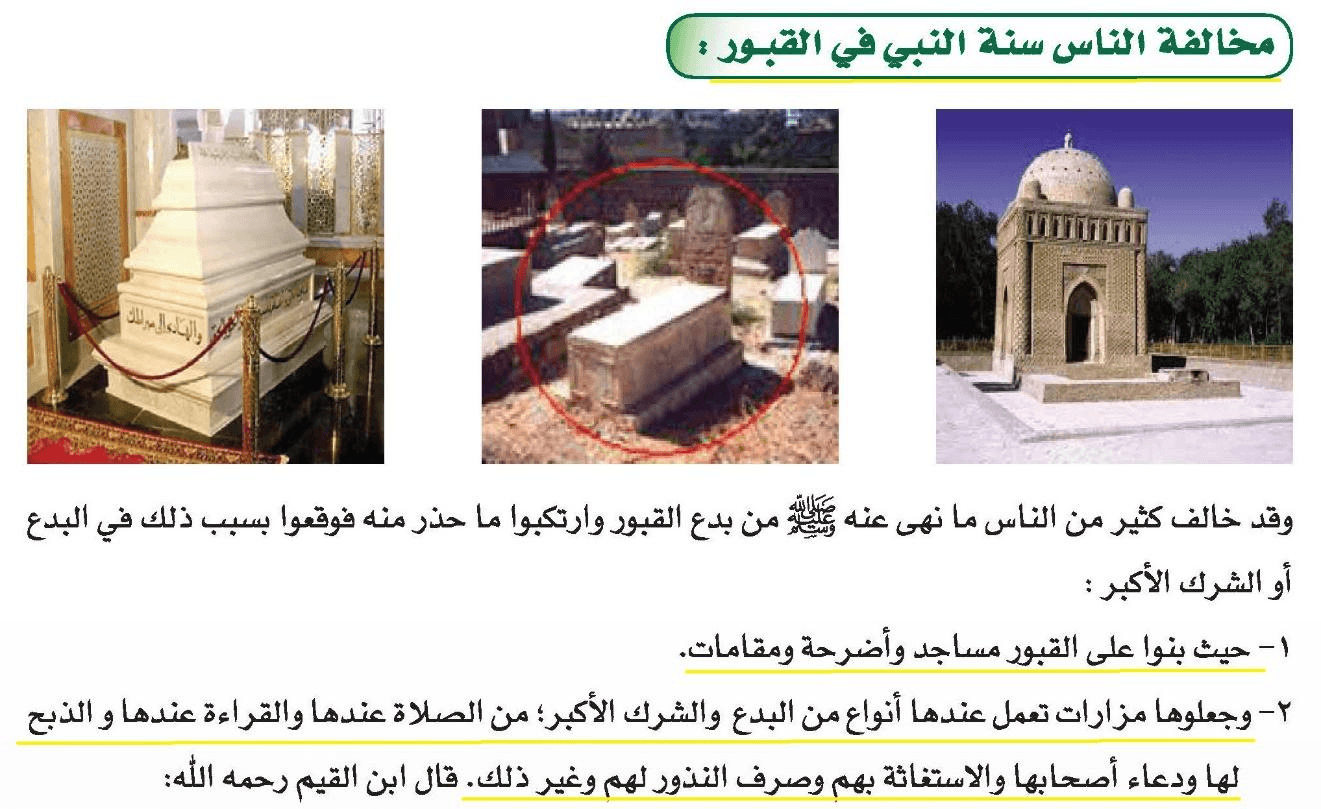
Ministry of Education, Al-Tawhid, Student Book, Secondary Semester Program, Level Three, 2016-17, p. 104
The second semester of the seventh-grade text expresses similar sentiment, saying that “those who make the graves of prophets and the righteous into mosques are evil-natured.”

Toward the end of one chapter, “The Role of Reformers in Declaring and Defending the Correct Doctrine,” in a secondary-level textbook, a short glossary lists practices of those who have deviated from correct religious practice. It describes Sufism as “a perverse path that began with the claim of asceticism, or severe self-discipline, then entered into illicit innovation, mis-guidedness, and exaggeration in reverence to the righteous.”
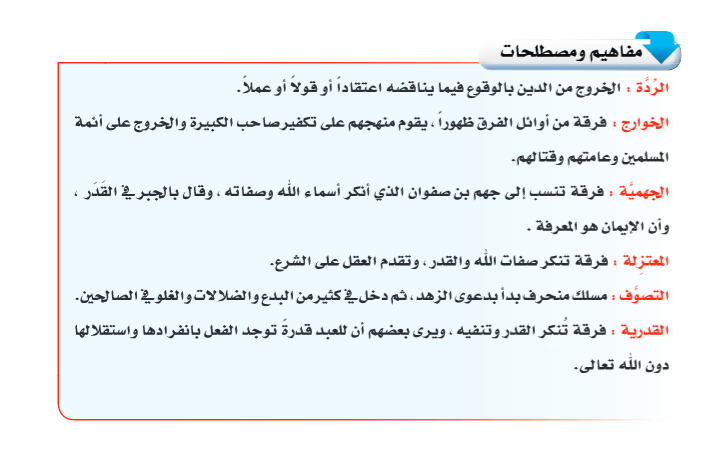
Saudi Ministry of Education, Al-Tawhid, Student Book, Secondary Semester Program, Level One, 2016-17, p. 40 
Saudi Ministry of Education, Al-Tawhid, Student Book, Secondary Semester Program, Level One, 2016-17, p. 40

The curriculum reserves its harshest criticisms for Jews, Christians, and people of other faiths, often describing them as kuffar, or “unbelievers.”


In one fifth-grade second semester textbook, the curriculum calls Jews, Christians, and Al Wathaniyeen, or “pagans,” the “original unbelievers” and declares that it is the duty of Muslims to excommunicate them: “For whoever does not [excommunicate them], or whoever doubts their religious infidelity is himself an unbeliever.”
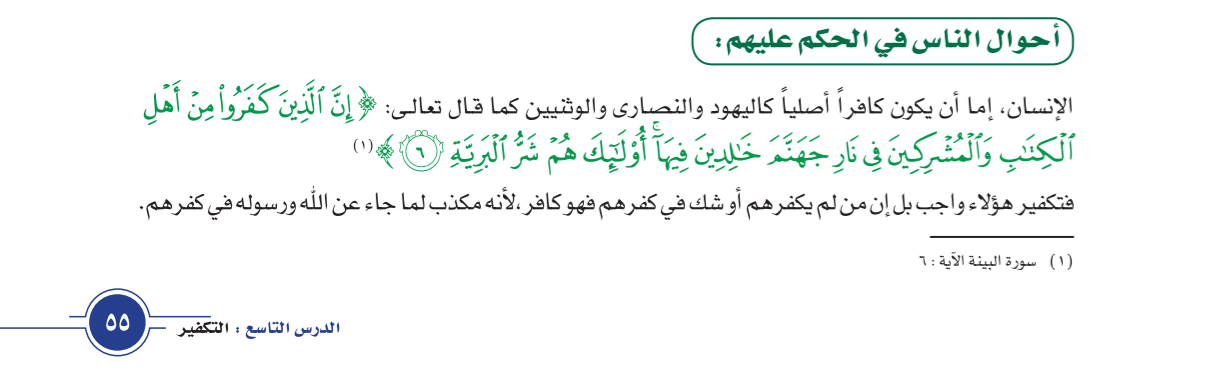
Saudi Ministry of Education, Al-Tawhid, Student Book, Fifth Grade, Second Semester, 2016-17, p. 55

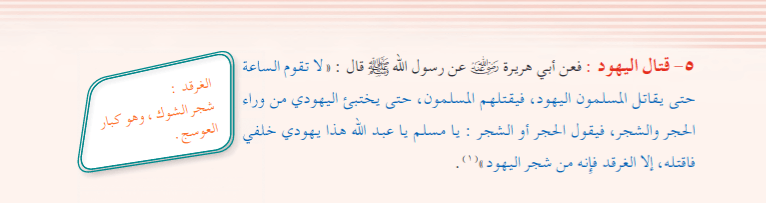
In a chapter listing markers by which one can recognize the approach of the Day of Resurrection, one passage states: “The Hour will not come until Muslims will fight the Jews, and Muslims will kill the Jews.”

Saudi Ministry of Education, Al-Tawhid, Student Book, Secondary Course, Level Two, 2016-17, p. 102.

A recurring and alarming lesson in the curriculum warns against imitating, associating with, or joining the “unbelievers” in their traditions and practices. One passage rejects and denounces the Sufi practice of celebrating the birth of the prophet, accusing Sufis of imitating Christians, i.e. “unbelievers,” in their celebration of the birth of Jesus.


Al-Tawhid, Student Book, Fifth Grade, Second Semester, 2016-17, p. 279
[Translation: Celebrating the prophet’s birth in the spring of every year is prohibited; for it is a new innovation and is in imitation of the Christian celebration of what is known as the birth of Christ.]
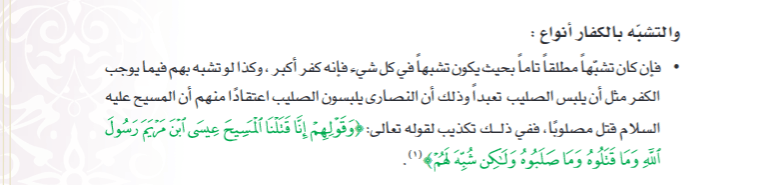
In another chapter, “Loyalty to Unbelievers,” the text explicitly calls on Muslims to reserve loyalty to God, the prophet, and other believers and to express hostility and antagonism toward “unbelievers.” It warns Muslims that by imitating “unbelievers” or even joining them in their celebrations, one is at risk of expressing loyalty to them, and worse even, becoming one of them.

Saudi Ministry of Education, Al-Tawhid, Student Book, Secondary Course, Level One, 2016-17, p. 165

The Saudi government’s official denigration of other religious groups, combined with its ban on public practice of other religions, could amount to incitement to hatred or discrimination.

International human rights law requires countries to prohibit “[a]ny advocacy of national, racial or religious hatred that constitutes incitement to discrimination, hostility or violence.”

Article 18 of the International Covenant for Civil and Political Rights (ICCPR) states: “Everyone shall have the right to freedom of thought, conscience and religion. This right shall include the freedom to have or adopt a religion or belief of his choice, and freedom, either individually or in community with others and in public or in private, to manifest his religion or relief in worship, observance, practice and teaching.”

“Saudi Arabia’s officials should stop denigrating other people’s personal beliefs,” Whitson said. “After years of reform promises there is apparently still little room for tolerance in the country’s schools.”

---

Read also:

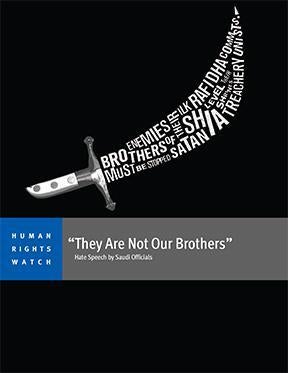
“They Are Not Our Brothers” 

Hate Speech by Saudi Officials


Friday, January 31, 2014

Airport authorities bar 61 Canadian Shia pilgrims from entering Egypt

61 pilgrims stopped at airport en route to religious sites

Egypt stopped 61 Canadian Shia Muslim pilgrims from entering the country and decided to hold them at Cairo airport until their onward flight, security officials said on Sunday.

The Canadians landed in Egypt from Iraq to complete a pilgrimage to Shia sites in the region, but were kept out on the orders of security authorities, said airport security officials who gave no further explanation. Canadians are usually allowed into Egypt with a visa bought upon arrival.

The Department of Foreign Affairs is in contact with the group and is monitoring the situation, a spokeswoman told CBC News, though she noted Egypt, like any country, is free to determine who can enter.

A spokesman for Canadian Foreign Minister John Baird said Ottawa would react later on Sunday.
The government of Egypt, an overwhelmingly Sunni Muslim nation, has long been criticized for discriminating against the country's small Shia community. Egypt's official Islamic establishment has previously warned against the spread of Shia beliefs.

The U.S. State Department's religious freedom report for 2012 said the government "continued to harass" Shias.

In June, four Egyptian Shias were beaten to death by a mob, a lynching blamed partly on sectarian passions whipped up by ultra-orthodox Salafist Muslim allies of President Mohammed Morsi, who was deposed by the army a few weeks later.

The Shia denomination emerged in the earliest days of Islam from a dispute over who should lead the Muslim community after the death of the Prophet Mohammad. The Shias believe leadership should have passed to Ali, the prophet's son-in-law, and his descendants.

Saturday, June 29, 2013

4 Shias killed: Victims of state-sponsored sectarianism

Los Angeles Times

Egypt's authorities under fire for sectarian killing

June 24, 2013

CAIRO -- The bloodied bodies of four men were dragged over a village road in what one witness described as a public lynching.

The victims – Shiite Muslims – were attacked and killed Sunday in a rampage reportedly led by radical Sunni Muslim preachers. Shiites comprise a fraction of Egypt’s predominately Sunni population, but the clerics had stoked sectarian mistrust in the poor village of Zawyat Abu Musalam.

"For three weeks the Salafist sheikhs in the village have been attacking the Shiites and accusing them of being infidels and spreading debauchery," Hazem Barakat, a witness who videotaped the incident, told the Egyptian media.

Barakat posted footage of the violence on the Web. The sins of a seething small town – not far from the great pyramids -- flashed across Twitter and onto TV screens, and suddenly Egypt glimpsed a menacing image of itself in these times of division and manipulated hate.

The pictures show men and boys brimming with rage, swinging fists. They encircled their victims, who rolled in the dust and then lay still at the sandaled feet of their tormentors. A Shiite house was set ablaze. Blood speckled dirt roads. The police were called, but reports said they did not do enough to prevent the massacre.

"They (the police) were just watching the public lynching like anyone else and did not stop anything," Barakat told the Ahram Online news website.

Hassan Shehata, one of Egypt’s leading Shiite voices, was among those killed. He was in town for a religious festival and had been accused by villagers of disparaging revered Sunni holy figures.

The state news agency MENA reported that Shehata and three other Shiites, who were told by the mob to leave the town, sustained “numerous puncture wounds and severe bruising.”

The bloodshed came as radical Salafi voices are growing more pronounced in an Egypt torn by political unrest, poverty and a nascent sectarianism, which is exploiting suspicions between Muslims and Christians and inflaming age-old enmity between Shiites and Sunnis.

The opposition Dustour Party blamed President Mohamed Morsi’s government for Sunday’s slayings. It said in a statement that "this heinous crime [was] a direct result ... of the disgusting religious hate speech that goes on escalating with the knowledge of the regime and the blessings of the president."

The killings followed a rally a week earlier in a Cairo stadium, where Salafis cheered Morsi when he announced that Egypt was breaking diplomatic ties with Syria. The civil war in Syria has lately been tinged by growing sectarianism as mostly Sunni Muslim rebels battle government forces loyal to President Bashar Assad, a member of the Alawite sect, an offshoot of Shiite Islam.

Radical preachers at the rally urged Morsi and his Muslim Brotherhood party to instigate a holy war against Assad’s regime. Morsi and the clerics also condemned Lebanon’s Shiite militant group Hezbollah for fighting alongside Assad’s army against the rebels.

Morsi on Monday denounced the violence in Zawyat Abu Musalam, saying "the state will not be lenient with anyone who tampers with Egypt's security or the unity of its people."

The political wing of the Muslim Brotherhood, which controls the government, said the killings violated Islam.
"It is forbidden to Muslims to spill Egyptian blood," Essam Erian, deputy leader of the Freedom and Justice Party, wrote on his Facebook page. 

"All Egyptian blood -- Muslim or Christian, man or woman, Sunni or Shiite, civilian or police. Whoever takes part in shedding blood, even in words ... or by hate speech, is taking part in a terrible crime."

Friday, May 31, 2013

Shias more dangerous than naked women

Ahram Online
Shias are more dangerous than naked women: Salafist MPs

Monday, 13 May 2013

Nour Party MPs argue that Iranian tourism to Egypt threatens national security and will undermine the country's 'Sunni doctrine' 


Members of the culture committee of Egypt's Shura Council discussed their concerns on Monday about the possibility of Iranian tourism to Egypt, with some expressing fears that it could spread Shiism in the country.

According to Ahram's Arabic news website, members of the committee called on Tourism Minister Hesham Zaazou to discuss the issue in the council, the countries upper house of parliament which is holding legislative powers until a house of representatives is elected.

The committee, headed by Fathy Shehab El-Din of the Freedom and Justice Party (FJP), engaged in a heated argument on the effects Iranian tourists could have on Egypt.
"The Shias are more dangerous than naked [women]," MP Tharwat Attallah of the Salafist Nour Party said during the meeting.

"They are a danger to Egypt's national security; Egyptians could be deceived into [converting to] Shiism, giving it a chance to spread in Egypt," he added.

Attallah also called upon the current ruling regime to limit Egypt's relationship with Iran, as the previous regime of ousted president Hosni Mubarak had done.

Similarly, MP Abd El-Galeil El-Qassem, also of the Nour Party, said that Shiism would undermine the "essence of religion and the [Sunni] doctrine."

He said that Egypt should put restrictions on Iranian tourism in Egypt because, according to him, Iranians aim to create strife in the country.

However, MP Yehia Abo El-Hassan from the Islamist Al-Wasat Party disagreed with their concerns, saying that "the countries that cut off relations with Iran are the US and Israel." He added that tourists only come to Egypt for a limited time.

The Salafist Call and the Nour Party, its political arm, held a conference in April against the spread of the Shia doctrine in Egypt.

The Salafists and several other Islamic groups have expressed their concerns recently at potential Iranian Shia influence in the country.

Diplomatic relations between the two countries were cut following Tehran’s Islamic revolution in 1979, but relations have improved since the election of Islamist President Mohamed Morsi in 2012. Iranian President Mahmoud Ahmadinejad visited Egypt in February 2013.

In April, more than 50 Iranians – the first official group of Iranians to visit Egypt for tourism in decades – arrived in Upper Egypt amid tight security. The visit came as part of a bilateral tourism agreement signed in February.


*Photo courtesy of REUTERS