Showing posts with label Dictatorship. Show all posts

Saturday, September 30, 2017

Egypt: Stop arrests, crackdown on LGBT individuals

HUMAN RIGHTS WATCH

Egypt: Stop Anti-LGBT Crackdown, Intimidation
‘Rainbow Flag’ Arrests Violate Privacy, Freedom of Expression

September 30, 2017


Egypt should stop arresting and harassing people suspected of homosexuality using trumped-up “debauchery” and “inciting debauchery” charges, Human Rights Watch said today. Security forces rounded up at least eleven people in the days following a September 22, 2017 concert in Cairo at which young concertgoers waved rainbow flags, a symbol of solidarity with  lesbian, gay, bisexual or transgender (LGBT) people, a defiant act in a country known to persecute gay men and transgender people.

After concertgoers shared photos of the rainbow flag display on social media, pro-government media went on an overdrive attack and conservative politicians and religious leaders demanded that the government take action. Police arrested one man on September 23 through entrapment on a dating app, a common police technique in Egypt, and claimed he had been among those to wave a flag.

On September 25,  the government said that it had arrested seven people identified through video footage of the concert. Several Egyptian activists questioned the veracity of this claim, but they documented additional arrests on September 27, when police picked up six men from the streets, charging them with debauchery and claiming they were all involved in the rainbow flag incident.

“Whether they were waving a rainbow flag, chatting on a dating app, or minding their own business in the streets, all these debauchery arrest victims should be immediately released,” said Sarah Leah Whitson, Middle East and North Africa director at Human Rights Watch. “The Egyptian government, by rounding people up based on their presumed sexual orientation, is showing flagrant disregard for their rights.”

The Dokki Misdemeanor Court in Giza sentenced the first victim on September 26 to six years in prison and a fine for “debauchery,” based on his presumed sexual conduct, and “inciting debauchery,” as prosecutors alleged he was among those who raised the rainbow flag at the concert. The court sentenced him to an additional six years of probation which will require reporting to the police from 6p.m. to 6a.m. until 2029. No lawyer was present at his trial.  He now has legal representation, and his appeal will be heard on October 11.

The six men arrested on September 27 are scheduled for trial on October 1. At least two more men were arrested on September 28 because of their presumed sexual orientation, and Egyptian media reported that another six men were arrested on September 28 in a raid on a home, although Human Rights Watch has not independently verified that report.

At the September 22 concert, people raised rainbow flags during the performance of the Lebanese group Mashrou’ Leila, which has an openly gay lead singer and has performed songs addressing same-sex relationships and gender identity. The Egyptian Musicians Syndicate opened an investigation into the event and banned future Mashrou’ Leila concerts in Egypt.

In Egypt, police routinely round up gay and bisexual men and transgender women, actively seeking them out and entrapping them on dating apps and through social media. One Cairo-based organization has documented the prosecution of at least 34 people for consensual same-sex conduct in the last 12 months. Since President Abdel Fattah al-Sisi came into power in 2014, several hundred people have been imprisoned on charges of consensual same-sex conduct.

Egyptian activists told Human Rights Watch they fear that the past week’s arrests could signal the beginning of an even harsher crackdown on LGBT people and those who publicly support them.

Egypt’s Forensic Medicine Authority also routinely subjects people to forced anal examinations. The archaic technique was devised in the 19th century to seek “evidence” of homosexual conduct,  but forensic experts around the world have condemned the practice as lacking any scientific validity and violating medical ethics. The UN  special rapporteur on torture,  the UN Committee Against Torture, and the African Commission on Human and Peoples’ Rights have described the exams as a form of torture or ill-treatment, prohibited under international law. The Egyptian Medical Syndicate has taken no steps to prevent doctors from conducting these degrading exams.

Egypt is a state party to the International Covenant on Civil and Political Rights, which protects the rights to privacy and to freedom of expression. Egypt’s constitution also protects these rights.

“Egypt should stop dedicating state resources to hunting people down for what they allegedly do in their bedrooms, or for expressing themselves at a rock concert, and should instead focus energy on improving its dire human rights record,” Whitson said.


*Photo by Jamal Saidi, courtesy of Reuters

Former prez. candidate sentenced to jail, in bid to bar him from 2018 elections

AMNESTY INTERNATIONAL
Egypt: Former presidential candidate given jail term in bid to stop him running in 2018 election

25 September 2017


Today’s conviction of Khalid Ali, a former presidential candidate and prominent human rights lawyer who is widely viewed as President Abdel Fattah al-Sisi’s top contender for the 2018 presidential elections, is politically motivated, said Amnesty International.

Khaled Ali was sentenced to three months in prison which would prevent him from standing in the 2018 presidential elections if the verdict is confirmed on appeal. The court found him guilty of “violating public decency” in relation to a photograph showing him celebrating a court victory after successfully reversing a controversial Egyptian government decision to hand over control of two Red Sea islands to Saudi Arabia.

He was released on a bail of 1000 Egyptian pounds pending appeal.

“Khaled Ali’s politically motivated conviction today is a clear signal that the Egyptian authorities are intent on eliminating any rival who could stand in the way of President Abdel Fattah al-Sisi’s victory in next year’s elections. It also illustrates the government’s ruthless determination to crush dissent to consolidate its power,” said Najia Bounaim, Amnesty International’s Head of North Africa Campaigns.

“It beggars belief that Khaled Ali, a prominent human rights lawyer and political activist, has been given a jail term simply for celebrating his victory in a court case. His conviction on this absurd charge must be quashed.”

The trial in Khaled Ali’s case was also riddled with flaws; the court issued its decision without hearing the defence lawyers’ final pleadings or allowing them to cross-examine witnesses for the prosecution about disputed video evidence submitted against Khaled Ali, which his defence lawyers argued was fabricated.

Earlier this year Amnesty International warned that the Egyptian authorities have intensified their crackdown on opposition activists ahead of the 2018 presidential election by rounding up activists from opposition parties. 


*Photo by Mohamed El-Shahed, courtesy of AFP/Getty Images

Thursday, August 31, 2017

Trump & Sisi Talk Business

Fucking birds of a feather...


*Artwork by Carlos Latuff, courtesy of Latuff Cartoons


Egypt authorities now blocking 405 websites, VPNs & proxy servers

Egyptian Streets
Egypt Blocks More Websites Raising the Total Number of Blocked Sites to 405    

August 31, 2017


The blocking of websites still continues with banning 261 VPN and proxy websites on 29 August raising the total number of blocked sites to 405, according to the latest report by the Association for Freedom of Thought and Expression (AFTE.)

On 24 May, the Egyptian authorities started blocking news websites on alleged claims of “supporting terrorism.”     In a span of 3 months, the blockade expanded from news websites to banning VPN sites, websites of non-profit organizations and personal blogs of journalists.

Among the blocked websites are the independent news website Mada Masr and the privately-owned Daily News Egypt.

The Arabic Network for Human Rights Information (ANHRI) and Reporters Without Borders (RWB) websites have also been blocked.   

Also, the blog of Ahmed Gamal Ziada, a writer for Masr Alarabia, researcher, and photojournalist, has been blocked preventing readers in Egypt from accessing his blog.

The blocked VPN websites are Tunnelbear,  Cyberghost, Hotspot Shield Elite VPN (Hsselite), Tigervpn and Zenvpn among many others.

The United Nations Special Rapporteur on freedom of expression, David Kaye, and the Special Rapporteur on human rights and counter-terrorism, Fionnuala Ní Aloáin, today raised grave concerns with the Government of Egypt over its ongoing assault on freedom of expression.

“Limiting information as the Egyptian Government has done, without any transparency or identification of the asserted ‘lies’ or ‘terrorism’, looks more like repression than counter-terrorism,” they said in the report.


---    

Read Also:   

UN rights experts express concern over blocked websites in Egypt  

---

Strike at Egypt's largest textile mill empowers workers with sense of hope

Socialist Worker
Strike gives hope in Egypt’s textile mills
 
The Mahalla textile strike shows the potential for Egyptian workers to fight in the face of repression

August 29, 2017


Tom Kay 


A recent 14-day strike by Egyptian textile workers was an impressive display of workers’ organisation and resilience in the face of Abdel Fatah el-Sisi’s military regime.

At its height, the strike involved 16,000 workers at the state-owned Misr Spinning and Weaving Company in Mahalla in northern Egypt.

It was suspended on Tuesday of last week after management agreed to consider the workers’ demands.

When workers launched their strike on 7 August, bosses had insisted that their demands would not be met.

The Misr Spinning and Weaving Company chair threatened to lock out workers.

But this threat was met by a demonstration of thousands of workers and their families through Mahalla.

There were also signs that their action could spread. Some 3,000 workers at the nearby Al-Nasr Processing and Dyeing factory joined the strike, and other factories reported slowdowns.

This clearly made bosses nervous, with Al-Nasr management quickly making promises to resolve the dispute.

The Misr Spinning and Weaving Company chairman instructed factory management to open dialogue with the workers.

Before the strike was suspended bosses had ramped up their rhetoric, branding it as “led by terrorists”. This is a reference to the banned Muslim Brotherhood organisation.
Promised

But last Sunday a leaflet signed by the company’s commissioner-general and a group of local MPs promised to consider workers’ demands within the week.

Workers responded by suspending their strike. But they made clear that it will restart after the Eid Al-Adha festival, ending on 4 September, if the promises prove hollow.

While the outcome of the dispute is yet to be seen, it is hugely important.

The Mahalla workers refused to be intimidated by the security forces, and have successfully forced Egypt’s largest state-owned company to consider their demands.

This may seem a small step, but is significant in a country where strikes are illegal and strike leaders and thousands of activists have been jailed.

Workers’ demands included payment of a delayed 10 percent bonus and increasing the monthly food allowance. These issues point to bigger problems the regime is facing.

It has recently pushed through series of “economic reforms” in exchange for a $12 billion International Monetary Fund (IMF) loan.

The IMF declared the Egyptian Central Bank’s governor its “Central Bank Governor of the Year” for the role he played in pushing through the free market reforms.

But these measures have seen inflation jump as high as 30 percent, plunging millions deeper into poverty.

Further laws favourable to foreign investors are expected soon. But alongside more attacks, there is a potential for a fightback.

Recent weeks have seen wildcat strikes by Egyptian train drivers over safety and large protests by residents of Warraq Island in Cairo. The regime is trying to demolish their homes and sell land to investors.

Resistance at Mahalla has often played an important role in Egypt, including during the 2011 revolution.

Mass strikes and uprisings in the city can give confidence to workers and poor people across Egypt to fight.

Total impunity for Sisi's security personnel who killed 900+ protesters four yrs ago

AMNESTY INTERNATIONAL
Egypt: Rampant impunity for security forces illustrates dark legacy of Rabaa massacre


Four years since security forces violently dispersed two sit-ins at Rabaa al Adawiya and al-Nahda squares in Greater Cairo, leaving at least 900 people dead and thousands more injured, Egypt is experiencing an unprecedented human rights crisis, said Amnesty International.

Not a single person has been held to account for the events on 14 August 2013, widely known as the Rabaa massacre. Instead, hundreds who attended the protests, including journalists and photographers who were covering the events, have been arrested and are facing an unfair mass trial. This vacuum of justice has allowed security forces to commit serious human rights violations, including using excessive lethal force and carrying out enforced disappearances, entirely unchecked.

“President Abdel Fattah al-Sissi’s regime has been determined to wipe out all memory of the massacre of the summer of 2013. The dark legacy of this failure to bring anyone to justice is that Egypt’s security forces today feel that they will not be held accountable for committing human rights violations,” said Najia Bounaim, North Africa Campaigns Director at Amnesty International.

“The Rabaa dispersal marks a defining turning point for human rights in Egypt. In the years since then, security forces have stepped up violations and varied their methods, carrying out enforced disappearances and extrajudicial executions on a scale never seen before.”

Since 2015, at least 1,700 people are estimated to have been “disappeared” by state agents for periods ranging from a few days to up to seven months. Most victims are abducted from the streets or their homes and held incommunicado for months, cut off from their families and lawyers. Egyptian security forces have also carried out dozens of extrajudicial executions.

The Egyptian government’s efforts to erase all memory of the 2013 massacres appear to have had some impact. In August 2013, following the excessive use of lethal force by security forces at Rabaa, the EU Foreign Affairs Council agreed to suspend export licenses to Egypt of any equipment which could be used for internal repression.  Despite this, many EU member states have continued to supply the country with arms and policing equipment. The latest EU country report published last month also makes no mention of the Rabaa massacre or the impunity security services still enjoy.

Grossly unfair trials

Since the Rabaa massacre, the Egyptian authorities have led a bitter crackdown against political dissidents, rounding up thousands and sentencing hundreds to life in prison

or death, after grossly unfair trials. In many cases defendants were convicted in mass trials based on scant or dubious evidence. Most faced charges including participating in unauthorised protests, belonging to the banned Muslim Brotherhood group, damaging state and private property, possessing firearms and attacking security forces.

The prosecution authorities, who have an obligation to bring those responsible for the 2013 tragedy to justice, have proven unwilling to investigate and prosecute those responsible for these crimes. Instead of offering justice and remedy for victims, they have helped shield perpetrators from prosecution.

“The level of disparity between the rampant impunity enjoyed by security forces who took part in the Rabaa dispersal on one hand, and the mass persecution of Muslim Brotherhood supporters who participated in protest as well as journalists reporting that day, is shocking,” said Najia Bounaim.

According to official statistics, six security officers were killed during the Rabaa dispersal and three during the al-Fateh protest two days later, also in Cairo. At least 1,231 people are being prosecuted in two mass trials collectively charged with their killing.

At least 737 people were charged for participating in the 2013 sit-in in what is known as “Rabaa dispersal case”. Among them is the journalist Mahmoud Abu Zeid, known as “Shawkan” who was arrested for taking photographs during the sit-in at Rabaa.

Many of those detained are held in appalling conditions including prolonged solitary confinement amounting to torture. They have frequently been beaten and denied access to lawyers, medical care or family visits.

In another emblematic case, known as the “Fateh mosque case”, at least 494 people are on mass trial for participating in a protest on 16 August 2013, while no investigation was conducted into the use of excessive lethal force by security forces that day that killed 120 protesters.

Those on trial include the Irish Egyptian national Ibrahim Halawa. The group are facing charges including participating in an unauthorised protest, belonging to a banned group, as well as murder and attacking the security forces. The prosecution failed to investigate claims by defendants that they were tortured by police to “confess” to crimes they did not commit.

The “Rabaa operations room case” involving four journalists from the RASSD news network - Youssef Talaat, Abdallah Al-Fakharany, Samhi Mostafa and Mohamed El-Adly – is another case that exemplifies the blatant injustice characterizing such trials.

The journalists were sentenced to five years in prison on 8 May 2017 after being convicted of charges including creating and overseeing media committees at the Rabaa sit-in to spread “false information and news”.  During the trial, their lawyers were unable to attend several crucial court sessions leaving them unable to prepare a proper defence. The court’s judgement also relied primarily on investigations by Egypt’s National Security Agency that were not substantiated by material evidence.

Egypt: Journalist jailed for 21 months without trial - health deteriorating at Scorpion Prison

HUMAN RIGHTS WATCH
Egypt: Detained Journalist’s Health Deteriorating

Held 21 Months Without Trial Despite Serious Illness

August 14, 2017

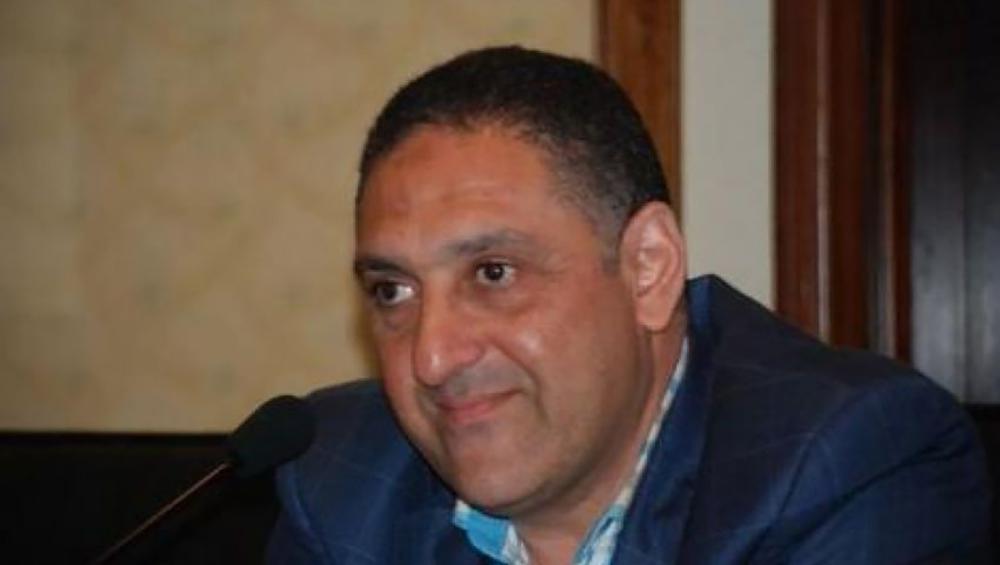
1. Egyptian journalist Hisham Gaafar before his detention in October 2015.

Egyptian authorities should immediately provide appropriate health care to the imprisoned journalist Hisham Gaafar, whose health, including his eyesight, is deteriorating in detention, Human Rights Watch said today. If prison authorities are unable to provide him necessary health care, they should allow him to seek care in private health facilities.
The Interior Ministry’s National Security Agency arrested Gaafar, director of the Mada Foundation for Media Development, a private media company, at his office in October 2015. Prosecutors have ordered Gaafar detained pending investigation on charges that include membership in the Muslim Brotherhood and illegally receiving foreign funds for his foundation, his lawyers told Human Rights Watch.

“Egypt’s Interior Ministry has shown contempt for Hisham Gaafar’s health and well-being,” said Sarah Leah Whitson, Middle East director at Human Rights Watch. “The fact that the Interior Ministry refuses to provide him his rightful care is a sad testament to Egyptian authorities’ disregard for detainees’ most basic rights.”

Gaafar, 53, has an eye condition – optic nerve atrophy – that requires ongoing specialist care or he may risk losing his sight altogether. He also suffers from a years-long prostate enlargement condition and risks complications if he does not receive the proper treatment. His eyesight is deteriorating and his health has worsened during his time in detention, in poor conditions, his family said.

Immediately following his arrest, police took Gaafar to his home, where officers seized his personal publications, work papers, computers, and phones, including those belonging to his wife and children. They detained his family inside the home for 17 hours. Security officers confiscated all his medical documents and reports and have not returned them to his family, despite their requests.

National Security officers then took Gaafar to an undisclosed location and held him for two days without access to his family or lawyers. His family heard of his whereabouts when a lawyer saw him by coincidence in the Supreme State Security Prosecution office in Cairo. Prosecutors have kept him in pretrial detention since then.

Under Egyptian law, prosecutors have broad power to hold those suspected of committing major offenses, including political and national security crimes, in pretrial detention for up to five months without regular judicial review, and judges can extend the detention for up to two years without requiring any substantive justification from prosecutors.

A judge should immediately review the necessity and legality of Gaafar’s detention and either send him to trial without further delays or release him, Human Rights Watch said.

During Gaafar’s time in detention, most of it spent in the maximum security Scorpion Prison in Cairo, the Interior Ministry’s Prisons Authority has not provided needed medicine but has intermittently allowed Gaafar to receive the eye vitamins and prostate medicine he required, after completely banning such supplies for the first two months of his detention. During those two months, his wife, Manar, told Human Right Watch, prison authorities kept Gaafar alone in a cell that, in his words, resembled a “tomb” without sunlight.

Later, they allowed his family very short and irregular visits, with no chance to verify whether he had received the medicine they had given to prison guards for him. Since March 2017, prison authorities have again denied him visits from relatives and his lawyer.

Before he was detained, Gaafar used special optic tools to read and glasses for everyday life. He also needed some assistance in his daily routine, his wife said. Prison authorities allowed his wife to deliver the glasses several months after his detention, but when they reached him, they were broken.

The way the glasses were broken suggested it had been deliberate, his wife said. She delivered new ones, but he has not had a new eye examination. His wife said that he recently told her he was not seeing as well as before, even with the glasses, suggesting his eyesight may have deteriorated.
Gaafar has had optic nerve atrophy in both eyes since he was a teenager, according to his wife.

Medical documents and reports from 2012, which she provided to Human Rights Watch after she retrieved them from a hospital, stated that at the time he had only 10 percent of his vision remaining in his left eye. Optic nerve atrophy has no cure, but it can be slowed by exposure to sunlight, medicine, and a healthy diet, his wife said doctors had told them. These are not available in adequate amounts to inmates at Scorpion Prison and many other Egyptian detention facilities.

A Human Rights Watch report on Scorpion Prison, published in 2016, documented cruel and inhuman treatment by officers of the Interior Ministry’s Prisons Authority that probably amounted to torture, including preventing food and medicine deliveries and other interference in medical care that may have contributed to prisoners’ deaths.
Gaafar’s wife said he appeared weak and to have lost significant weight during her March 2017 visit. She said she saw bite marks all over his body, which he said were from insects that had infested his cell due to a sewage leak. He told her he had suffered pain for weeks because he was sleeping on the concrete floor without a mattress. Human Rights Watch previously documented that Scorpion Prison authorities deny inmates a wide variety of basic necessities for hygiene and comfort, including beds, pillows, and mattresses.

In late February 2016, after a public outcry and growing criticism from the Journalists’ Syndicate, human rights organizations, and public figures, the authorities transferred Gaafar to the Tora Prison Hospital after he began suffering from urinary retention – the inability to fully empty his bladder.

Prison authorities then transferred him to al-Manial University Hospital, which is affiliated with Cairo University. Doctors who examined him there on March 4, and again on March 10, 2016, asked prison officials to allow him to be kept at Cairo University hospitals to prepare for more tests, including diagnostic surgery on his enlarged prostate, the apparent cause of the urinary retention.

Gaafar spent five months at the prisoners’ ward at Qasr al-Aini Hospital, where ill inmates who are hospitalized are usually held, but the authorities repeatedly failed to give Gaafar timely permission to go for needed tests. Human Rights Watch has previously documented that prison authorities pressure hospitals not to admit inmates or to return them without necessary treatment.

Gaafar told his wife that he received very little medical care there. In August 2016, the authorities sent Gaafar back to Scorpion Prison before he had undergone the examinations that he was told he needed. Prison authorities and Cairo University hospitals have not allowed Gaafar’s family to read or obtain a copy of the medical reports issued during his detention, his wife said.

The family managed to obtain the hospital discharge report through unofficial means, however, and provided a copy to Human Rights Watch. The report contained no detailed information on any tests Gaafar may have undergone or treatment received but stated that he suffers from “mild prostate enlargement" and that "the patient needed no surgical intervention.” The report did not state what caused the enlargement or whether it was benign or cancerous – a primary concern for the family.

A couple of days after returning to prison, Gaafar found blood in his urine, and officers transferred him again to Tora Prison Hospital. But the facilities there lack a urology specialist, his wife said, and the prison authorities have refused to arrange for Gaafar to be seen by one. He appeared before a court in August 2016 carrying a urinary catheter, his lawyers said.

His wife said that after filing several complaints, a National Security officer visited Gaafar in detention in November 2016, and told him, “don’t worry, we will treat you.” But Gaafar’s request to seek treatment in a private health facility was ignored.

One of his lawyers and his wife both told Human Rights Watch that prosecutors never allowed them to obtain a copy of the official charges against him or the rest of his case file. However, Hossam al-Sayed, another Mada Foundation journalist who was arrested with Gaafar on the same day, was released without bail in March 2016, said the lawyer Karim Abd al-Rady of the Arab Network for Human Rights Information (an independent rights group).

Under an amendment to the penal code decreed by President Abdel Fattah al-Sisi in September 2014, Gaafar could face a 25-year sentence if convicted of receiving foreign funds illegally.

Prisoners have the right to the highest attainable standard of physical and mental health guaranteed in the International Covenant on Economic, Social and Cultural Rights, which Egypt ratified in 1982.

The Committee Against Torture, the monitoring body of the Convention against Torture and Other Cruel, Inhuman or Degrading Treatment or Punishment – ratified by Egypt in 1986 – has found that failure to provide adequate medical care can violate the treaty’s prohibition of cruel, inhuman, or degrading treatment.

“It is deeply concerning that Egypt’s judiciary has become complicit in human rights violations by cruelly detaining people like Gaafar for years without justification, exposing them to serious abuse and harm,” Whitson said.

Friday, June 30, 2017

Egyptian authorities now blocking over 100 websites

Quartz Africa
Egypt has blocked over 100 local and international websites including HuffPost and Medium

Thursday, 29 June 2017

Abdi Latif Dahir


The list of blocked websites in Egypt keeps growing, as the government widens what some say is an unprecedented crackdown on both local and international digital outlets. So far, 114 websites have been blocked in the north African nation since May 24, according to the latest figures from the non-governmental organization Association for Freedom of Thought and Expression.

A majority of these are news websites, but also included are platforms that can be used to access blocked sites or that allow for anonymous browsing and communication.

The affected websites include sites like Mada Masr, the financial newspaper Al Borsa, and Huffington Post Arabic. Twelve websites linked to Al Jazeera were also been blocked. Medium, the online publishing platform, was also banned.

The outage also affected Tor, the free software that provides users with online anonymity, and Tor bridges, which helps users circumvent the blocking of Tor itself. The website of the Open Observatory of Network Interference (OONI), an international network that monitors internship censorship and surveillance, was also blocked.  

The growing censorship comes as the government says it’s cracking down on websites that are “publishing false information” and “supporting terrorism.” (Link in Arabic) Egypt is currently in the midst of a three-month state emergency, following twin attacks on churches that killed almost 50 people in April.

The country is also part of a Saudi-led coalition that has put a blockade on Qatar, demanding, among other things, the closure of the Doha-based Al Jazeera media network which it considers to a be a propaganda tool for Islamists. The government of president Abdel Fattah el-Sisi is also embroiled in a maritime demarcation agreement over its decision to vote on the transfer of two islands in the Red Sea to Saudi Arabia—a move that has angered many Egyptians.

However, journalists and activists say the campaign is suppressing free expression and voices critical of the government. Some are accusing the regime of failing to disclose any judicial or administrative decision to block the sites—or whether emergency law provisions were applied.

“Even in the darkest days of the repressive Mubarak era, the authorities didn’t cut off access to all independent news sites,” Najia Bounaim, Amnesty International’s north Africa campaigns director, said.

In a June 19 report, OONI stated that deep packet inspection technology was being used to monitor and block these websites. Mada Masr, one of the blocked sites, also reported that the decision to block the sites was carried through a “centralized decision” by the government rather than by the country’s telecoms or internet service providers.

Since going offline, sites like Mada have been publishing articles on Facebook. Lina Attallah, the editor of the site, said the strategy of blocking the sites works to the government’s advantage for now.

“If they did something more grave like arresting team members or me it would make big noise, whereas blocking the website is the best way to paralyze us without paying a high price for it,” Attallah told Reuters.


*Photo by Mohamed Abd El Ghany, courtesy of Reuters

Traitor Sisi ratifies agreement handing over two Egyptian islands to KSA

Mada Masr
Sisi ratifies Tiran and Sanafir agreement, cedes islands to Saudi Arabia

Saturday, 24 June 2017


Image may contain: one or more people

President Abdel Fattah al-Sisi ratified the maritime border demarcation agreement that cedes sovereignty over Tiran and Sanafir islands to Saudi Arabia on Saturday, according to a Cabinet statement.

The Tiran and Sanafir agreement was passed with a majority in Parliament on June 14, with only 119 MPs voting against it.

Sisi was able to seal the deal with Saudi Arabia after the Supreme Constitutional Court temporarily froze two contradictory rulings, one issued by the State Council in January and the other by the Court of Urgent Matters in April, on Wednesday.

In June 2016 the State Council’s Court of Administrative Justice (CAJ) annulled the agreement signed by Prime Minister Sherif Ismail in April of the same year. This was followed by two Court of Urgent Matters rulings on September 29 and December 31 to overturn the CAJ’s decision.

However, on January 16, the State Council’s Supreme Administrative Court upheld the initial June ruling, stating that the deal was a concession of territory, an act that is prohibited per Article 151 of the Constitution. On April 2, the Court of Urgent Matters overturned the CAJ’s decision.

Several political parties and prominent politicians held a press conference on June 12, ahead of Parliament’s discussion of the deal, to announce a series of sit-ins protesting the agreement which many members of Egypt’s opposition hailed as unconstitutional.

The presser was attended by dozens of activists and members of several political parties, as well as former presidential candidates Hamdeen Sabbahi and Khaled Ali. Also in attendance were ousted chief of the Central Auditing Authority Hesham Geneina, expelled member of Parliament Mohamed Anwar Sadat, critical journalist Khaled al-Balshy, National Council for Human Rights member George Ishaq and former Ambassador Masoum Marzouk.

Following Parliament’s approval, hundreds of members of professional syndicates signed statements in opposition to the Tiran and Sanafir agreement, including 850 journalists, 620 members of the Engineers Syndicate’s general assembly and more than 600 members of the Cinema Syndicate, among others.

Since the June press conference security forces have carried out an extensive arrest campaign across several governorates, apprehending more than 120 activists and protesters seen to oppose the deal.

At least 60 opponents arrested in connection to Tiran & Sanafir handover

Mada Masr
Rights Monitor: Police have arrested 60 opponents of the Tiran and Sanafir agreement 

Friday, 16 June 2017

Image may contain: one or more people, people standing and text

Police have arrested a total of 60 people connected to political action against the agreement to concede sovereignty over Tiran and Sanafir islands to Saudi Arabia, according to the Freedom for the Brave campaign.

The nationwide arrests commenced after Parliament approved the agreement on Wednesday night, with police moving to detain political activists and party members in Cairo, Alexandria, Damietta, Sharqiya, Beni Suef, Fayoum, Luxor, Port Said and Suez.

Lawyer Mohamed Abdel Aziz told Mada Masr that those arrested come from several political parties, including the Socialist Popular Alliance Party, the Constitution Party, the Bread and Freedom Party, the Popular Current Party and the Karama Party, as well as from Egypt’s independent activist community, all of whom voiced their opposition to the agreement.

According to Abdel Aziz, security forces arrested many of the activists and party members from their homes, including Hassan Ahwany who is being questioned by the Dokki prosecution in Cairo and is being represented by Abdel Aziz.

Many of those arrested will be questioned by prosecutors on Friday, including six people who were arrested in Port Said and Tanta, according to the Front to Defend Egyptian Protesters.

The FDEP has added that activists Mahmoud Nagib and Israa Fahid face charges of incitement to protest and obstructing public transportation, and that three people arrested in Luxor on Thursday are in the National Security Agency’s custody. In Ismailia, Constitution Party member Ahmed Santos was questioned by the prosecutor, who has issued Santos a 15-day detention order pending an NSA report.

According to lawyer Abdel Aziz Yousef, the prosecutor issued Egyptian Social Democratic Party member Islam Marei a 15-day detention order pending investigation into charges of incitement against the regime; insulting state institutions, including the Armed Forces, police and the judiciary; distributing anti-government flyers; and using social networks for incitement against state institutions.

Abdel Aziz described the arrests as “ferocious,” saying security forces are attempting to prevent any mobilization against the Tiran and Sanafir agreement. The scope of the arrests, he asserted, is disproportionate to the protests that have taken place in reaction to the agreement.

Police arrested eight people in the proximity of the Journalists Syndicate’s headquarters in downtown Cairo on Wednesday night, which was the site of a protest against the Tiran and Sanafir agreement. All eight were released yesterday on LE10,000 bail.

Police also dispersed a demonstration on Wednesday in front of the Egyptian Social Democratic Party’s headquarters in downtown Cairo, barricading the protesters inside the building, according party member Ziad al-Eleimi.

Activists & journalists arrested in protest over handover of Egypt islands to KSA

AFP
Egypt approves transfer of islands to Saudi Arabia

Wednesday, 14 June 2017


CAIRO - Egypt's parliament approved on Wednesday a controversial maritime agreement with Saudi Arabia that transferred two Red Sea islands to the kingdom.

The deal, which was being challenged in court, had sparked rare protests in the country, with the opposition accusing the government of selling Egyptian territory to its Saudi benefactors.

The vote came after days of heated debate in Parliament, with opponents even interrupting one committee session with chanting.

Courts had initially struck down the agreement, signed in April 2016, but a year later another court upheld it.

Lawyers were now challenging the deal before the constitutional court.

The accord sparked rare protests in Egypt last year, with President Abdel Fattah al-Sisi accused of having traded the islands of Tiran and Sanafir for Saudi largesse.

The government said the islands were Saudi to begin with, but were leased to Egypt in the 1950s.
Opponents of the agreement insisted that Tiran and Sanafir were Egyptian.

On Tuesday evening, dozens of journalists protested against the agreement in central Cairo, before being dispersed by police, journalists' union official Gamal Abdel Rehim said.

Several were briefly arrested before being released, but "three reporters are still detained, and contacts are being made with the interior ministry to get them released," he said.


*Photo by Mohamed El-Raai, courtesy of AFP

32 Cement Workers Sentenced to 3 yrs in Prison - For Peacefully Protesting

Mada Masr
Court sentences 32 workers from Tourah Cement Company to 3 years imprisonment for protesting

Sunday June 4, 2017

Jano Charbel


Thirty two Tourah Cement Company workers were sentenced to three years in prison by the Maadi Misdemeanors Court on Sunday. They were arrested after security forces broke up a sit-in at the company in May.

The workers faced charges of assaulting a police captain, obstructing justice and using violence to resist authorities. All defendants are currently being held in at the 15th of May prison.

According to lawyer Haitham Mohamedein the defense team will appeal against Sunday’s verdict within 10 days of the verdict.

He told Mada Masr that although the trial was held before justices from the Maadi Misdemeanors Court, they convened at the Tourah Police Academy. The trial, which took place over two sessions was initially scheduled for May 28, however it was adjourned until Saturday after police personnel failed to transport the defendants to the trial.

“The workers’ families and friends were not allowed to attend these trial, and there were no journalists present during,” he added.

They were arrested after staging a sit-in in March that lasted several weeks before it was forcefully dispersed by security forces on May 22. Seventy five security personnel initiated the protest to demand full-time contracts and the retroactive payment of wages as some have worked full-time at the company for up to 15 years on temporary or part-time contracts.

Mohamedein criticized the court for issuing the harshest penalties against the protesting workers. He told Mada Masr last week that the charges are trumped-up and baseless, adding that “the Interior Ministry appears to have decided that it wants to extend the legal proceedings.”

The workers’ defense team and media reports claim that the judge presiding over this trial condemned them for initiating the sit-in, even before the conclusion of the court’s hearings. “A judge should only express their decision while issuing a verdict,” Mohamedein told Mada Masr.

The judge is also reported to have claimed that labor strikes are criminal, despite the fact the none of the charges were related to striking as there had been no work stoppages or slowdowns, and even though Article 15 of the Constitution safeguards the right to strike.

A petition protesting the workers arrests has been endorsed by 12 labor unions, political parties and groups and over 250 individuals. It claims that the detainees were physically abused, treated in a degrading manner and had their personal belongings stolen while in custody.

A worker who had been protesting at the company told Mada Masr last week, on condition of anonymity, that four of the detained workers had been hospitalized. They could not confirm the exact reasons for this, “as we have not been able to speak directly with our detained coworkers since their arrests, and because they were not brought to their court session.”

Mohamedein said that the workers had been “entirely peaceful and nonviolent” and, responding to accusations that they assaulted an officer, he explained that no medical report had been filed or evidence filed.

The protest followed the company’s refusal to compensate the family of a security guard who was killed during an altercation with people thought to be stealing property from company grounds. The company board claimed the deceased security guard was not entitled to any compensation or insurance because he was a part-time employee.

The board’s claim flouted a previous court verdict. In May last year, the workers filed a lawsuit against the company before the Appeals Court, which ruled that they were entitled to the company’s profit-sharing scheme, healthcare and other employment rights.

The recent crackdown on labor-related protests in Egypt has seen security forces break up several sit-ins and protesting workers stand trial. In April police arrested 16 protesting Telecom Egypt workers and December 2016 saw security break up sit-ins at two of billionaire Nassif Sawiris’ companies.

In an ongoing case 26 Alexandria Shipyard Company workers are currently standing military trial, accused of inciting workers to strike. The military trial of these civilian workers has been adjourned 12 times, and is currently scheduled to take place on June 20.

Wednesday, May 31, 2017

Egypt blocks 21 websites for "terrorism" & "fake news"

REUTERS
Egypt blocks 21 websites for 'terrorism' and 'fake news'

Thu May 25, 2017


Egypt has banned 21 websites, including the main website of Qatar-based Al Jazeera television and prominent local independent news site Mada Masr, accusing them of supporting terrorism and spreading false news.

The blockade is notable in scope and for being the first publicly recognized by the government. It was heavily criticized by journalists and rights groups.

The state news agency announced it late on Wednesday. Individual websites had been inaccessible in the past but there was never any official admission.

Reuters found the websites named by local media and were inaccessible.

The move follows similar actions taken on Wednesday by Egypt's Gulf allies Saudi Arabia and the United Arab Emirates, which blocked Al Jazeera and other websites after a dispute with Qatar.

Qatar said hackers had posted fake remarks by its emir criticizing U.S. foreign policy but Saudi and UAE state-run media reported the comments anyway.

An official from Egypt's National Telecom Regulatory Authority would not confirm or deny the blockage, but said: "So what if it is true? It should not be a problem."

Two security sources told Reuters the 21 websites were blocked for being affiliated with the outlawed Muslim Brotherhood or for being funded by Qatar.

Cairo accuses Qatar of supporting the Brotherhood, which was ousted from power in Egypt in 2013 when the military removed elected Islamist President Mohamed Mursi following mass protests against him.

Ties between Qatar and Egypt were badly damaged after Mursi's fall. Doha welcomed a number of senior Brotherhood figures, although since then Qatar has asked several to leave.

Mada Masr, an Egyptian news website based in the country which describes itself as progressive and has no Islamist or Qatari affiliations, was also inaccessible.


Journalists at Mada Masr said the website was publishing articles on Facebook for now. It remains accessible outside Egypt or via proxy.

"Nothing explains this blockade more than a very clear intention from the authorities to crack down on critical media in ways that bypass the law," Mada Masr Editor in Chief Lina Attalah told Reuters on Thursday.

The website is registered in Egypt and its journalists are based in the country, she said. No one from the government contacted the management before or after the 21 websites went down.

CLIMATE OF FEAR

Two other local websites, including that of a print newspaper registered with the authorities, were also down, as were several Brotherhood-affiliated websites and Egypt-focused ones that publish from abroad.


The Huffington Post's Arabic website also was inaccessible, although the international version could be accessed.

State news agency MENA cited a senior security source as saying the websites were blocked because they supported terrorism and that the government would take legal action.

"A senior security source said 21 websites have been blocked inside Egypt for having content that supports terrorism and extremism as well as publishing lies," MENA said.

Mahmoud Kamel, who sits on the board of Egypt's official press union, said was a clear attack on freedom of speech.

"This move is unacceptable. We oppose all blocking of news websites but this is unfortunately part of the general climate of fear we are experiencing in Egypt," he told Reuters.

Egyptian authorities have cracked down on the Islamist, secular and liberal opposition alike since President Abdel Fattah al-Sisi, then the military chief, toppled Mursi.

Since then, hundreds have been killed and thousands arrested, including journalists. Sisi told CNN in 2015 that Egypt has "unprecedented freedom of expression."


*Reporting by Ahmed Aboulenein; Additional reporting by Ali Abdelaty, Eric Knecht and Ahmed Mohamed Hassan; Editing by Giles Elgood and Alison Williams

Trump compliments dictator Sisi for his shoes

CNN


Riyadh, Saudi Arabia (CNN) - Moments after Egyptian President Abdel Fattah al-Sisi complimented President Donald Trump on his "unique personality that is capable of doing the impossible," Trump exchanged pleasantries back, praising el Sisi's shoes.

"Love your shoes. Boy, those shoes. Man ... ," Trump said, as reporters were being escorted out of the room.

It's unclear the exact shoe the Egyptian President was wearing, but appeared to be black boots, similar to those Trump was wearing, but shinier.


The exchange wasn't observed by video cameras in the room, but was captured in an audio recording.

Trump held meetings with several Arab world leaders Sunday morning, ahead of a planned speech on confronting Islamist extremism and later a forum on Twitter.


*Photos by Evan Vucci, courtesy of Associated Press

- - - -  -

Other bizarre photos


UN rights chief says Sisi crackdown "facilitates radicalisation"

REUTERS
UN rights boss says Egypt crackdown 'facilitates radicalisation'

Mon May 1, 2017


U.N. High Commissioner for Human Rights Zeid Ra'ad al-Hussein said on Monday that heavy-handed security measures by Egypt were fostering the very radicalisation it was looking to curb.

Egypt last month was shaken by one of the bloodiest attacks in years when Islamic State suicide bombers targeted two Christian churches, killing 45 people. President Abdel Fattah al-Sisi declared a three-month state of emergency hours later.

Zeid condemned the church attacks at a news conference in Geneva but said that Egypt's approach to combating Islamist militants was exacerbating the problem.

"...a state of emergency, the massive numbers of detentions, reports of torture, and continued arbitrary arrests - all of this we believe facilitates radicalisation in prisons," Zeid said.
 

She said "the crackdown on civil society" was "not the way to fight terror."

Responding, Foreign Ministry Spokesman Ahmed Abu Zeid called the remarks an "irresponsible" and "unbalanced" reading of the situation in Egypt, where society is targeted by "terrorist operations," according to a statement from the ministry.

Abu Zeid defended the emergency law as passed by an elected parliament subject to "rules and restrictions" set out by the constitution.

"We don't see the High Commissioner criticizing other states implementing states of emergency that are dealing with similar conditions," the statement said.

Sisi, elected in 2014 in part on a pledge to restore stability to a country hit by years of turmoil since its 2011 uprising, has sought to present himself as an indispensable bulwark against terrorism in the Middle East.

Rights groups, however, say they face the worst crackdown in their history.

"National security yes, must be a priority for every country, but again not at the expense of human rights,” said Zeid.


*Photo by Pierre Albouy courtesy of REUTERS
**Reporting by Stephanie Nebehay; Writing by Eric Knecht; Editing by Robin Pomeroy

Monday, May 1, 2017

Increasing crackdowns on labor protests; Decrease in workers' strikes

Mada Masr
What does the cooperation Sisi called for in his Labor Day address mean amid a marked deterioration in labor rights and freedoms?


President Abdel Fattah al-Sisi presided over the state’s official Labor Day commemoration on Sunday, organized by the state-controlled Egyptian Trade Union Federation, delivering a 10-minute televised address from the luxurious Al-Massa Hotel in Cairo.

“Egypt still expects much from its workers,” the president said, in one of several statements emphasizing workers’ cooperation with the state.


What Sisi did promise centered on increased foreign investment — a central tenet of the government’s economic structural adjustment whose efficacy is contested — saying that it would translate into increased employment opportunities for Egypt’s youth and decent living standards for the country’s workers.

This is in addition to promising to recommence operations at hundreds of factories that have remained closed since 2011, by allocating resources from the Tahya Masr Fund and to push a spate of labor-related legislation — including the unified labor law, trade union law, health insurance law, and social insurance law — through Parliament.

Nonetheless, there is a more stark reality for Egypt’s workers. Parliament is stacked against labor interests and the legislative body’s manpower committee is virtually controlled by the ETUF, whose leadership has not been elected since 2011 and is instead appointed by Manpower Minister Mohamed Saafan. Sisi and Parliament have extended the ETUF executive board’s terms of office several times, with the latest occurring in January 2017.

There have also been severe crackdowns against labor movements, with police and the Armed Forces jailing dozens of workers who participated in industrial action, and the prosecution referring them to trial. Simultaneously, the number of industrial protests has decreased to its lowest level in several years, falling from 1,117 strikes between May 2015 and April 2016, to 744 in the same period the following year.

To mark Labor Day, Amnesty International issued a statement on Sunday calling on the Egyptian state to end its “Relentless assault on rights of workers and trade unionists.” Human Rights Watch adopted a similar tone in a February statement, calling on Egyptian authorities to “Drop charges, change laws that restrict rights to organize and strike.”

The independent Egyptian initiative Democracy Meter issued its latest figures on Sunday regarding the number, location and causes of labor strikes and professional protests that occurred between May 2016 and April 2017.

According to the institute’s tally, at least 151 workers, unionists and professionals have been arrested, prosecuted or referred to trial over the course of the past 11 months. During this same period, 2,691 workers and professionals were dismissed from their jobs “for exercising their right to protest.”

Cairo was the site of the most labor action in Egypt over the past year, according to Democracy Meter’s figures, tallying 151 initiatives. After Cairo comes the Nile Delta governorates of Kafr al-Sheikh, with 68 initiatives, and Sharqiya, with 65.

The 26 Alexandrias Shipyard Company workers who are standing in a military trial plagued by numerous adjournments is one of the more prominent cases to have occurred in the past year. Other notable cases include the detention of six bus drivers from the Public Transport Authority in Cairo, 21 workers from the IFFCO Oils Company in Suez, scores of workers from the Egyptian Fertilizers Company and Egyptian Basic Industries Company in Suez, and 16 workers from Telecom Egypt Company.

While the state’s austerity measures have worsened labor and living conditions, workers efforts to push back have been curtailed, according to Mohamed Awwad, the lawyer for the 26 Alexandria Shipyard Company workers.

“Any worker who attempts to publicly demand their rights these days usually thinks twice before doing so, as the state will likely respond to peaceful protest actions with forceful and oppressive measures,” he says.

Awwad says that 19 of the 26 shipyard workers who are standing military trial have been persuaded to tender their resignations in exchange for assurances that they would not be jailed pending their military trial. Since the forced dispersal of the labor protest at the Defense Ministry-owned shipyard in May 2016, some 1,000 workers of a 2,300-person workforce have not been allowed back to work and are earning only half of their basic wages, according to the lawyer.

The string of police crackdowns on labor strikes in the Suez Governorate is symbolic, according to Ahmed Bakr, the secretary general of the Independent Union of Workers at the IFFCO Oils Company. “[The crackdown] aims to send a message to workers, that your protests or strikes will be deemed illegal and the state will only uphold the rights of big businessmen and investors.”

Bakr and all eight other members of the Independent Union of Workers at the IFFCO Oils Company, in addition to 12 other workers, stood trial in the Suez Governorate in January 2017. They have since been acquitted of charges of instigating a strike and obstructing production. However, the prosecution appealed the court’s decision, a second trial was held March before the Suez Appeals Court, which also opted for an acquittal.

“These labor rights (right to strike, and organize) are supposed to be safeguarded in the Egyptian Constitution. However, the reality in Egypt is quite different,” says Seif, the son of jailed PTA bus driver and independent unionist Mohamed Abdel Khaleq.

Abdel Khaleq and his coworker Ayman Abdel Tawwab were held in Tora for nearly seven months for planning a strike in September 2016, before being granted conditional release in March. Per the terms of his release, Abdel Khaleq must submit himself to Cairo’s Sharabiya Police Station two days a week, for nearly four hours at a time. The PTA workers still face the possibility of trial.


Egypt’s independent trade unions are organizing their own Labor Day conference, which is scheduled for the evening of May 1 at the headquarters of the Center for Trade Union and Workers Services (CTUWS) in Cairo. The event is being held under the title “Social Justice and Union Freedoms.”

Since July 2013, there have not been any Labor Day rallies, marches or public protests in Egypt.

Sunday, April 30, 2017

Security forces' campaign of extrajudicial murders in N. Sinai?

AMNESTY INTERNATIONAL
Egypt: Video of extrajudicial executions offers glimpse of hidden abuses by military in North Sinai

21 April 2017


Information gathered by Amnesty International confirms that members of Egyptian military are responsible for at least seven unlawful killings, including shooting dead at point blank range an unarmed man and a 17-year-old child.

The organization’s experts analyzed leaked video footage of the killings and compared it with photographs and a YouTube video published by the Egyptian military, as well as interviewing Sinai-based sources and experts.  The footage shows a member of the Egyptian military shooting the child dead alongside another man in military uniform, whose accent indicates that he is a Sinai local.


The bodies of five other men who appear to have been killed earlier also appear in the video.

“The ease with which the members of the Egyptian military forces participated in the killing of defenseless men in cold blood shows that they fear no oversight or accountability for their actions.

These killings amount to extrajudicial executions, crimes which Egypt has an obligation under international law to investigate, prosecute and punish. They fit into a disturbing pattern of apparent such killings in North Sinai,” said Najia Bounaim, Amnesty International’s Campaigns director for North Africa.

In January, Amnesty International highlighted the extrajudicial execution of six men by members of the security forces in North Sinai. The men had been in state custody for one to three months at the time of their killing.

The leaked video broadcast on the Islamist-leaning TV station Mekameleen also shows members of the Egyptian military holding at least two unarmed men in US Humvee armoured vehicles before they were shot dead. The USA is Egypt’s main supplier of military equipment.

According to the Stockholm International Peace Research Institute (SIPRI), the USA has delivered over 1,000 Armoured Personnel Vehicles to Egypt since 2003, including 100 Humvees (High Mobility Multipurpose Wheeled Vehicles.)

“States including the USA have been transferring arms used by the military in North Sinai without ensuring any oversight or monitoring of the extent to which they may being used to commit or to facilitate the commission of serious human rights violations. All such transfers must be halted,” said Najia Bounaim.

Amnesty International has confirmed that a Facebook statement by Egypt’s military spokesperson in December 2016 and YouTube video by the Ministry of Defense on 5 November 2016 showed images of at least two of the victims who are seen being killed in the leaked video.

The spokesman said these were “terrorists” killed by the military during counter-terror operations in North Sinai. The leaked video however, shows that at least two of the men killed were unarmed at the time and analysis of the footage indicates that the arms were later planted by the military next to their bodies to make it appear as if they were fighters killed after an exchange of fire.

In analyzing the video, Amnesty International experts also confirmed that this incident took place before 5 November 2016 given the video posted by the Ministry of Defense was posted on that date.

According to Sinai-based sources, this video was shot in a desert area that lies between south Sheikh Zowaid and Rafah in North Sinai. Online local news outlet Sinai 24 reported that two of the victims are brothers, named Abd el-Hady Sabry, aged 16 and Dawood Sabry aged 19. They both belong to a tribe called al-Awabda from Rafah town on the Egypt-Israel border. This is consistent with the video, which shows that prior to being shot dead the teenager said that he belonged to the al-Awabda tribe and was from Rafah.

The video clearly shows the man in uniform with a Sinai accent, believed to be a local bedouin recruit operating under military control, shooting an unarmed man with five bullets to the head.  Over the past couple of years the military in Sinai has increasingly relied on some local Sinai families to assist them in intelligence gathering.

An August 2016 Mada Masr article cites interviews with Sinai recruits who acted as auxiliaries to assist the military in conducting operations in areas where the military could otherwise not enter.

Sinai observer, Mohannad Sabry, said that this had created much friction between Sinai tribes related to revenge and retaliation given these non-military armed members acted outside of the law on many occasions against Sinai residents.

“Whether or not he is a full member of the Egyptian military, this man was acting under military command and control. The Egyptian military is responsible for these cold blooded killings,” said Najia Bounaim.

“It is crucial that those responsible for these appalling killings do not go unpunished.  A failure to prosecute and punish those responsible will further fuel the pervasive impunity for crimes committed by security forces and give a green light for an escalation of violations.”

Additional information: Analysis of photographic and video evidence 

Analysis of a leaked video do not appear to show any signs of manipulation or staging. Photos published by the Army spokesperson on December 6 , 2016, show two bodies that are also visible in the leaked video.

The same bodies appear in a video released by the Ministry of Defense on November 5, 2016, the incident thus had to happened before that date.

There are several serious concerns that should be raised: Most importantly, a corpse of a person who was filmed being executed while in custody of armed forces appears to displays the same body posture (face up, right knee at an angle, right hand on crotch) and clothes (blue jeans, dark sweater) as a corpse visible in a video released by the ministry of Defense on November 5, 2016. In the video released by the MoD,  a rifle is visible next to the body, which was not present when the person was executed.


 Corpse after execution visible in a leaked video 

Corpse displaying same body posture and clothes then the person being executed while in custody of armed forces. Rifle is seen next to body, which was absent at the moment person was executed. Screenshot taken from MoD video


A further question raises the following scene, where again a rifle was probably placed next to a corpse.


In a leaked video published on April 20. Rifle visible in the photo released by the Army spokesperson appears to be missing.


Finally, the first person being seen executed in the April 20 video is unarmed at the moment of the execution. 30 seconds later in the video, a rifle is being seen as nicely being placed on his body.